
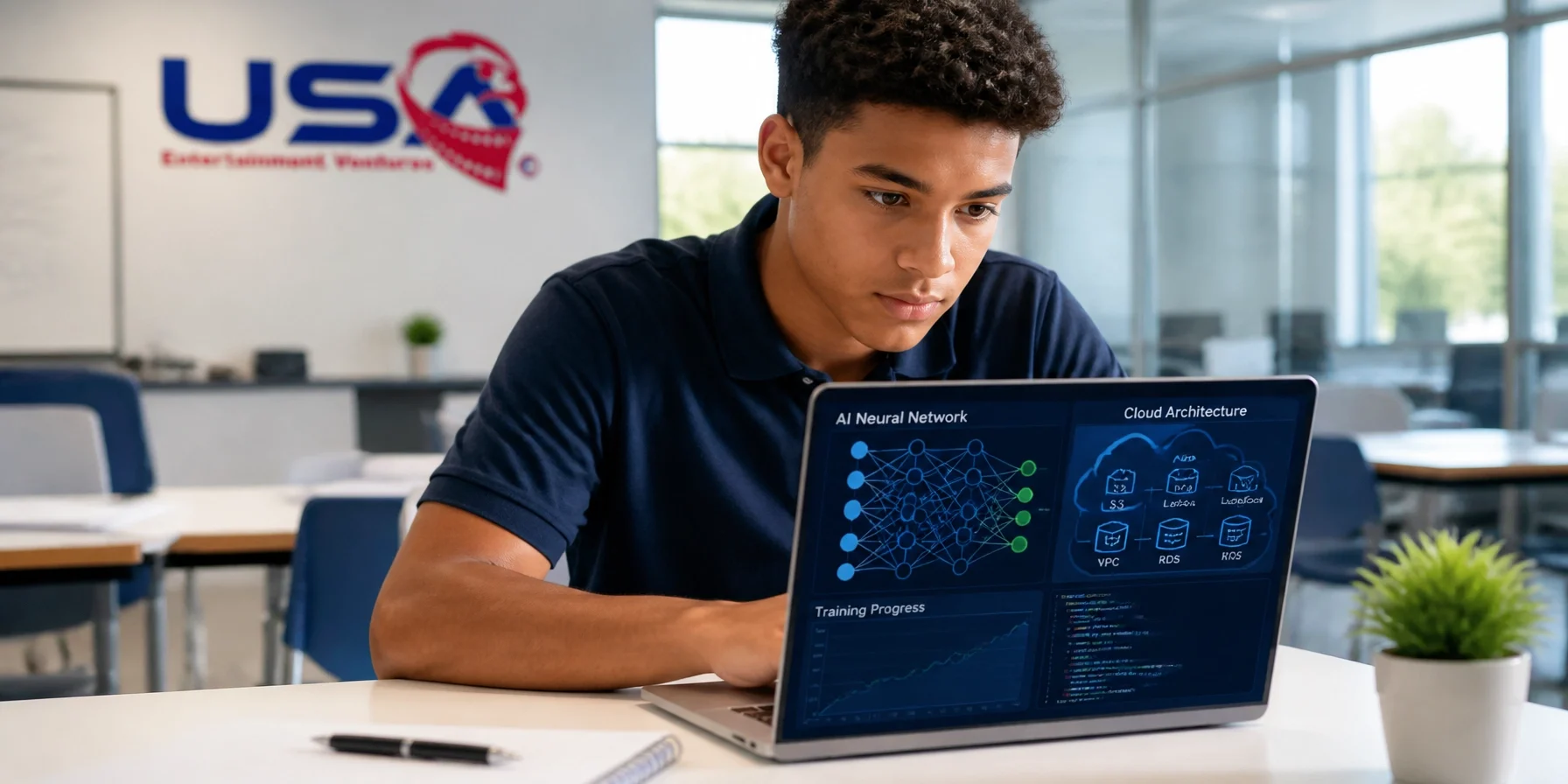
The global demand for skilled professionals in Artificial Intelligence (AI), Cloud Computing, and Data Analytics is currently outpacing the traditional supply chain of university graduates. As enterprises navigate the complexities of digital transformation, the search for talent has moved from "just-in-time" hiring to long-term strategic cultivation. At USA Entertainment Ventures LLC, we recognize that managing growth requires a forward-thinking approach to human capital: one that begins long before a candidate enters the professional workforce.
The emerging consensus among industry leaders and educational consortia is clear: high school is the new frontier for technical talent acquisition. By establishing a presence in K-12 education now, companies can secure a sustainable pipeline of pre-vetted, high-potential individuals who are already fluent in the languages of the future.
The Case for High School Talent Pipelines
For decades, the standard corporate recruitment strategy relied heavily on the four-year degree. However, recent data suggests a significant shift in how technical skills are acquired and validated. According to recent research from the National Applied AI Consortium (NAAIC), extending workforce pathways into high schools is essential for building a resilient national AI workforce.
There are three primary reasons why high schools have become the critical "top-of-funnel" for tech talent:
- Early Skill Acquisition: High school students are already leveraging Generative AI for research and creative projects. By providing industry-aligned curriculum early, companies can guide this natural curiosity toward professional applications in cloud architecture and data science.
- Cost-Effectiveness and Loyalty: Recruiting and training a student through internships and apprenticeships often results in higher retention rates and lower acquisition costs compared to competing for senior talent in an overheated market.
- Diversity and Equity: Reaching students at the secondary level allows organizations to engage with diverse socioeconomic groups who might otherwise be overlooked by traditional university recruitment tracks.
Step 1: Defining Outcomes and Industry Partners

Creating a "Next-Gen Talent Funnel" is not a philanthropic exercise; it is a business strategy. To begin, organizations must define what success looks like over a three-to-seven-year horizon.
Consider the roles you will need to fill in the near future. Are you looking for cloud support specialists, junior data analysts, or machine learning assistants? Once these roles are identified, the next step is establishing formal partnerships. These often take the form of Memorandums of Understanding (MOUs) with local school districts, Science, Technology, Engineering, and Math (STEM) centers, or magnet schools.
"Industry leaders must move from being passive observers to active participants in the educational ecosystem," notes a recent industry briefing on AI education. This participation involves not just funding, but providing the technical blueprints: such as cloud credits from providers like AWS or Azure and access to de-identified corporate datasets for classroom use.
Step 2: Designing the Funnel Stages
A successful talent funnel mirrors the stages of a marketing lifecycle, moving from broad awareness to specific conversion.
- Discovery: This stage is about generating interest. Companies can host "AI & Cloud Days" or guest speaking engagements that demystify careers in data.
- Engagement: Identifying "signals" of potential. Rather than looking at general GPAs, savvy recruiters look for participation in robotics clubs, GitHub contributions, or performance in data science competitions.
- Skill-Up: This involves sponsoring curriculum modules. For instance, a two-week unit on Python-based data cleaning or basic cloud storage provides immediate value to the student while acting as a vetting mechanism for the company.
- Vetting/Selection: Moving beyond the classroom, this stage involves micro-internships: short, virtual projects where students solve a real-world business problem.
Step 3: Implementing Micro-Internships and Real Projects

The transition from student to professional is most effective when it involves authentic work experiences. Micro-internships are a cornerstone of the next-gen funnel. These are typically two-week virtual engagements that allow a company to assess a student's technical aptitude and soft skills in a controlled environment.
By working on actual projects, students gain a sense of belonging and professional identity. This is particularly relevant in high-stakes fields like those managed by our DOD Skill Bridge recruitment divisions, where technical proficiency and disciplined project management are paramount. Whether it is deploying a simple web app or analyzing a dataset to find operational efficiencies, these micro-experiences build a bridge between theoretical knowledge and corporate application.
Step 4: Scaling Engagement with AI and Data Analytics
Managing a funnel of hundreds or thousands of students requires advanced technology. Many institutions are now using AI agents to manage student communication, providing personalized nudges and resources at scale.
For a corporation, this means implementing a specialized CRM that tracks a student’s journey from their first classroom interaction through to their application for a formal internship. Predictive analytics can help identify which students are most likely to persist in technical tracks, allowing recruiters to focus their mentorship efforts on high-potential candidates.
Strategic Alignment: From High School to Career
The logic of the high school talent funnel aligns closely with other modern workforce initiatives, such as the Department of Defense (DOD) Skill Bridge program. Both models emphasize the importance of identifying talent early and providing a structured pathway into high-demand roles. While Skill Bridge focuses on transitioning service members, the high school funnel focuses on the upcoming generation. Both are essential components of a comprehensive talent management strategy.
As we look toward 2030, the companies that thrive will be those that view education as a core part of their supply chain. By investing in high school talent today, businesses are not just solving their hiring needs; they are contributing to a more robust, technologically literate society.
Actionable Takeaways for Your Organization
- Identify 3 Target Roles: Choose entry-level technical roles that can be filled by individuals with specific certifications (Cloud+, AWS Practitioner) rather than just four-year degrees.
- Audit Local Programs: Research high schools in your region with existing Computer Science or Career and Technical Education (CTE) programs.
- Launch a Pilot Micro-Internship: Create a 10-hour virtual project based on a real data or cloud problem your team has recently solved.
- Engage Mentors: Recruit senior engineers to spend two hours a month as "virtual guest speakers" or project reviewers.

Conclusion
The creation of a Next-Gen AI Talent Funnel in high schools is an urgent priority for any organization dependent on technical expertise. The traditional methods of recruitment are no longer sufficient to meet the scale of the AI revolution. By engaging with students early, providing practical experience, and leveraging technology to manage the pipeline, companies can ensure they have the talent needed to innovate and lead in the years to come.
At USA Entertainment Ventures LLC, we remain committed to managing these complex transitions and helping our partners build the workforce of the future. The opportunity to shape the next generation of tech leaders is available now: it only takes five minutes to start planning your first step.





