
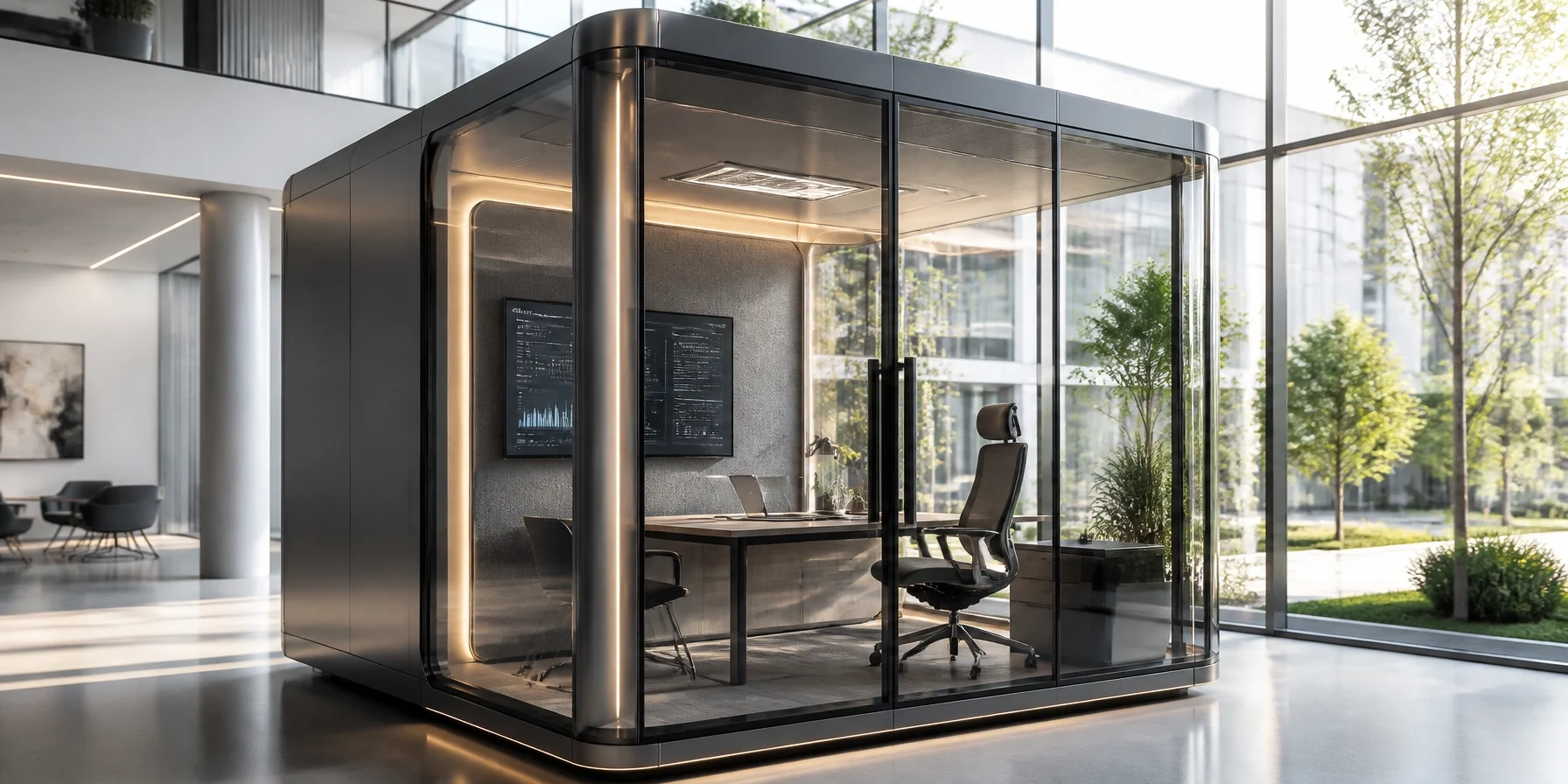
For decades, the "computer lab" was a predictable, if slightly depressing, staple of educational and corporate environments. Imagine a windowless room, rows of beige towers hummed with a monotonous drone, and the scent of stale air mingled with the ozone of CRT monitors (and later, flat screens). It was a place of isolation: a factory line for digital consumption rather than a catalyst for modern innovation.
However, the landscape of work and learning has undergone a radical shift. The rise of remote work, the explosion of the creator economy, and the heightened urgency of global cybersecurity have made the traditional, static lab obsolete. Enter the Pod. These modular, tech-integrated micro-environments are not just replacing the old labs; they are redefining what it means to be productive, creative, and career-ready in the 2020s.
At USA Entertainment Ventures LLC, we recognize that infrastructure dictates outcomes. Whether you are navigating business development or exploring new horizons through DOD SkillBridge recruitment, the environment in which you train determines your ability to excel.
Here are five reasons why modular pods are the future of workforce training and why they are infinitely cooler than the computer labs of yesteryear.
1. The "SOC-in-a-Box": Immersive Cybersecurity Training
Traditional computer labs are notoriously generic. They are designed for everything and, consequently, optimized for nothing. In the high-stakes world of cybersecurity, this lack of specialization is a hindrance. Modern cyber threats require a "War Room" mentality, not a library setting.
Modular pods can be outfitted as specialized Security Operations Centers (SOCs). These "SOC-in-a-box" environments provide the acoustic isolation and multi-monitor setups necessary for deep focus and threat hunting. When a trainee steps into a cyber-focused pod, the environment itself signals a shift in mindset.

According to industry data, the cybersecurity workforce gap remains a critical vulnerability for global supply chains. By utilizing modular pods, organizations can deploy high-fidelity simulations that mimic real-world cyber defense scenarios. This isn't just about learning to code; it’s about operating within the pressure cooker of a digital defense perimeter. For transitioning service members utilizing the SkillBridge program, these pods offer a tangible bridge from military tactical environments to civilian digital defense roles.
2. The Creator’s Sanctuary: Content Creation and Digital Media
The traditional lab was built for input: typing papers, browsing the web, and occasionally editing a spreadsheet. Today’s economy, however, is built on output. From corporate training videos to YouTube explainers and high-end marketing assets, content creation is a core business competency.
Trying to record a high-quality podcast or edit a 4K video in an open-plan computer lab is a logistical nightmare. The noise floor is too high, the lighting is inconsistent, and the equipment is rarely up to snuff. Modular pods solve this by offering a dedicated "Studio Vibe."

Integrated with soundproofing, professional-grade lighting, and high-performance workstations, these pods are the new incubators for media and marketing innovation. They allow individuals to produce professional-grade assets without the overhead of a full-scale recording studio. For a business, this means the ability to rapidly iterate on marketing content or internal training modules, keeping the brand agile and relevant.
3. Real-Time Command Centers: Logistics and Supply Chain Management
Logistics is no longer just about moving boxes; it is about managing massive streams of data in real-time. The modern logistics professional is more of a data scientist than a warehouse foreman. Traditional labs lack the physical infrastructure to support the "Command Center" dashboarding required for modern supply chain operations.
Modular pods can be configured as decentralized logistics hubs. Imagine a pod equipped with massive displays showing global shipping maps, port congestion data, and predictive AI analytics. This environment allows for the high-level coordination required in today’s volatile market.

By moving the "lab" closer to the point of action: whether that’s on a warehouse floor or a corporate headquarters: companies can ensure that their logistics teams have the tools to react instantly to disruptions. This proximity and specialized tech integration are what make pods a superior choice for business consulting and operational management.
4. Scalability and the Speed of Deployment
One of the most significant drawbacks of the traditional computer lab is its permanence. Building a new lab requires construction, permits, weeks of electrical work, and a significant capital outlay. If the needs of the organization change, you are left with a room full of expensive, immovable infrastructure.
Pods, by contrast, are built on the principles of modularity and agility. They are prefabricated units that can be delivered and operational within days. This speed of deployment is a game-changer for workforce development.
If a company suddenly needs to train 50 new recruits in logistics cybersecurity, they don't have to wait for a building project to finish. They can simply drop a fleet of specialized pods into an existing atrium, warehouse, or even a parking lot. This "plug-and-play" infrastructure allows businesses to scale their training capabilities at the speed of the market, ensuring they never miss a growth opportunity due to a lack of physical space.
5. Collaboration Over Isolation: The Social Architecture of Pods
Perhaps the "coolest" aspect of the pod revolution is the shift in social architecture. Traditional labs were designed for "heads-down" work, with rows of desks facing a wall or a teacher. While this might have worked for standardized testing, it is the antithesis of modern innovation, which thrives on collaboration.
Pods are often designed as social clusters. They provide private spaces for deep work but are situated within collaborative zones that encourage spontaneous interaction. They are the "third space" of the workplace: a bridge between the formal office and the casual lounge.

This layout mirrors the collaborative nature of modern tech companies and startups. It prepares learners for the reality of the 21st-century workplace, where project management and cross-functional teamwork are just as important as technical skills. At USA Entertainment Ventures LLC, we see this as a vital component of professional development. Whether you are a veteran transitioning through SkillBridge or a business leader looking to optimize your team, the pod environment fosters the kind of creative friction that leads to breakthroughs.
Actionable Takeaways: How to Transition
If your organization is still tethered to the 1995 model of a computer lab, it’s time to consider a modular upgrade. Here is how you can start:
- Identify Your Specialized Needs: Don't build a general-purpose space. Determine if your priority is cybersecurity, content creation, or logistics management, and spec your pods accordingly.
- Think "Distributed," Not "Centralized": Instead of one big room, consider placing pods where people actually work. This reduces bottlenecks and increases spontaneous use.
- Leverage Modular Speed: Use pods to pilot new training programs. Because they are mobile, you can test a new curriculum in one location and move the equipment if the program grows or changes.
- Integrate Your Talent Pipelines: If you are looking for top-tier talent, consider how your physical environment appeals to groups like the DOD SkillBridge community. A high-tech, modern training environment is a powerful recruiting tool.
The Future is Modular
The death of the computer lab isn't something to mourn; it’s an evolution to be celebrated. By embracing modular pods, we are moving away from the static, the stale, and the uninspired. We are moving toward an infrastructure that is as dynamic and innovative as the people who use it.
The future of work isn't found in a row of desks; it's found in the specialized, immersive, and incredibly cool world of the pod.





