
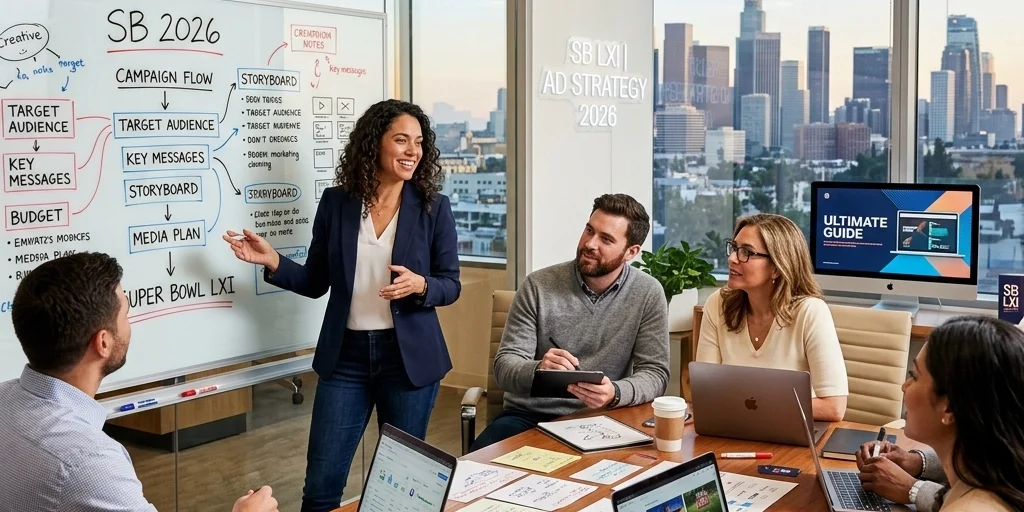
The Super Bowl has always been more than just a football game; it is the undisputed heavyweight championship of the advertising world. As we look back at the 2026 season and the strategies that defined it, one thing is clear: the landscape of sports media advertising has shifted. At USA Entertainment Ventures LLC, we’ve watched this evolution closely, helping brands navigate the transition from simple television commercials to complex, multi-platform ecosystems.
In 2026, the stakes reached an all-time high. With 30-second ad spots climbing to a staggering $8 million to $10 million, the margin for error has effectively disappeared. This guide breaks down the essential "Super Bowl Playbook" that successful brands used to capture attention, drive engagement, and see a real return on investment in a fragmented media world.
The Financial Reality of the $10 Million Moment
For years, the Super Bowl ad was a $7 million gamble. By 2026, that number jumped significantly. This increase reflects the unique value of the event: it remains the only time in the year when millions of people are collectively focused on the same screen at the same time. However, paying for the spot is only the beginning.
Industry data shows that for every dollar spent on airtime, top-tier brands now spend an additional 25% to 50% on production and "surround-sound" digital marketing. To succeed in this environment, a business needs more than a funny script; it needs a comprehensive business consulting strategy that accounts for the pre-game, the game-day pulse, and the post-game data trail.

The Three-Phase Campaign Framework
The most successful campaigns of 2026 didn't just show up on Sunday. They followed a rigorous three-phase framework designed to maximize the lifespan of their creative assets.
Phase 1: The Pre-Game Hype (January 15 – February 7)
The weeks leading up to the game are arguably more important than the game itself for building audience pools. By releasing teasers or full ads early, brands like Squarespace have demonstrated how to pair paid media with earned buzz.
Key tactics in this phase include:
- Early Digital Launch: Releasing ads on YouTube ahead of kickoff allows for "earned views" that don't cost the brand a cent in media spend.
- Efficiency Campaigns: Launching Facebook click campaigns in late January can yield 16–30% higher efficiency compared to the actual Super Bowl week, as ad auctions become less crowded.
- Contextual Targeting: Reaching sports enthusiasts through NFL content and fantasy football searches builds a warm audience that will recognize your brand when the big commercial finally airs.
Phase 2: Game Day Execution (February 8)
When the whistle blows, the focus shifts to real-time responsiveness. In 2026, the "War Room" became standard for any brand serious about their investment. These 10-20 person teams of creators and community managers monitor every meme and trending moment to ensure the brand remains part of the conversation.

Successful game-day execution requires:
- Cross-Platform Amplification: Your ad shouldn't just be on the TV. It needs specific variants running simultaneously on TikTok, Instagram, and X (formerly Twitter).
- Standby Ad Sets: Preparing creative for multiple outcomes: whether it's a blowout or a nail-biter: allows brands to react instantly to the game's momentum.
Phase 3: Post-Game Saturation (February 9–15)
The game may be over, but the business results are just beginning to materialize. This is the phase where retargeting transforms "views" into "customers."
Research suggests that search spikes for highlights and viral moments continue for at least a week after the event. Brands that capitalised on this in 2026 used aggressive retargeting to reach anyone who engaged with their Super Bowl content, driving them toward a specific call to action on their digital platforms.
Newsletter: The Super Bowl Playbook – Sports Media's Advertising Strategy
As part of our commitment to keeping our clients informed, we’ve integrated the latest insights from our newsletter into this guide. One of the most critical elements of modern sports media strategy is understanding the visual and emotional hooks that keep viewers from looking at their phones during your $10 million window.
Watch this breakdown of modern sports media advertising to see these principles in action:
https://www.youtube.com/watch?v=l6J-0zileKE
Storytelling vs. Immediate Branding
In 2026, a significant trend emerged: storytelling took precedence over immediate brand recognition. Because the Super Bowl offers a rare 30-to-60-second window of undivided attention, brands can afford to wait.
Take Coinbase’s karaoke-style commercial as a reference point. By focusing on an engaging, interactive experience first and revealing the brand second, they created a mystery that forced viewers to stay tuned. When you have the audience's attention, you don't need to scream your name in the first three seconds; you need to earn their interest so the final reveal carries more weight.
Digital Alternatives for Growing Brands
Not every business has $10 million for a television spot, but that doesn't mean they can't play on the Super Bowl stage. Digital-first strategies allowed mid-sized companies to compete for attention at a fraction of the cost.
Demand Gen and Influencer Partnerships
In 2026, influencer-driven content achieved up to 70% cost-per-click (CPLC) efficiency. By partnering with authoritative voices: rather than just high-priced celebrities: brands were able to build trust more effectively.
- YouTube Demand Gen: This allows brands to place their video content specifically alongside NFL highlights and commentary.
- Platform Efficiency: During the first quarter, view rates for skippable campaigns reached 64–70% for those who started their campaigns early in February.
If you are looking to scale your brand's presence without a traditional broadcast budget, our team at USA Entertainment Ventures LLC specializes in these high-efficiency digital pathways.

Actionable Takeaways for Future Strategy
To succeed in the next cycle of sports media advertising, consider these practical steps based on the 2026 data:
- Start Early: Don't wait for February. Your audience is being built in mid-January.
- Focus on Authority: Choose influencers who have a genuine connection to your product. In 2026, subject matter expertise outperformed "A-list" status.
- Use a Multi-Platform Approach: A TV ad is a lead generator for your social media channels. Ensure your showcase is ready for the influx of traffic.
- Prioritize Retargeting: The fortune is in the follow-up. Budget at least 20% of your spend for the post-game week.
A Vision for the Future of Entertainment Ventures
The 2026 Super Bowl proved that advertising is no longer a one-way street. It is an interactive, multi-layered experience that requires a blend of creative storytelling and rigorous data analysis. As the cost of entry continues to rise, the importance of a well-defined strategy becomes paramount.
At USA Entertainment Ventures LLC, led by our CEO Dan Kost, we believe that these high-stakes moments are where true innovation happens. Whether you are aiming for a national broadcast spot or a surgical digital campaign, the principles of the "Super Bowl Playbook" remain the same: plan ahead, stay reactive, and never stop retargeting.
If you're ready to take your advertising strategy to the next level, feel free to contact us to discuss how we can help you navigate the complex world of entertainment and business consulting.

The future of sports media is bright, and for those with the right strategy, the opportunities for growth are limitless. We look forward to seeing how these trends continue to evolve as we approach the 2027 season and beyond. For more information about our mission and who we are, visit our about page.





