
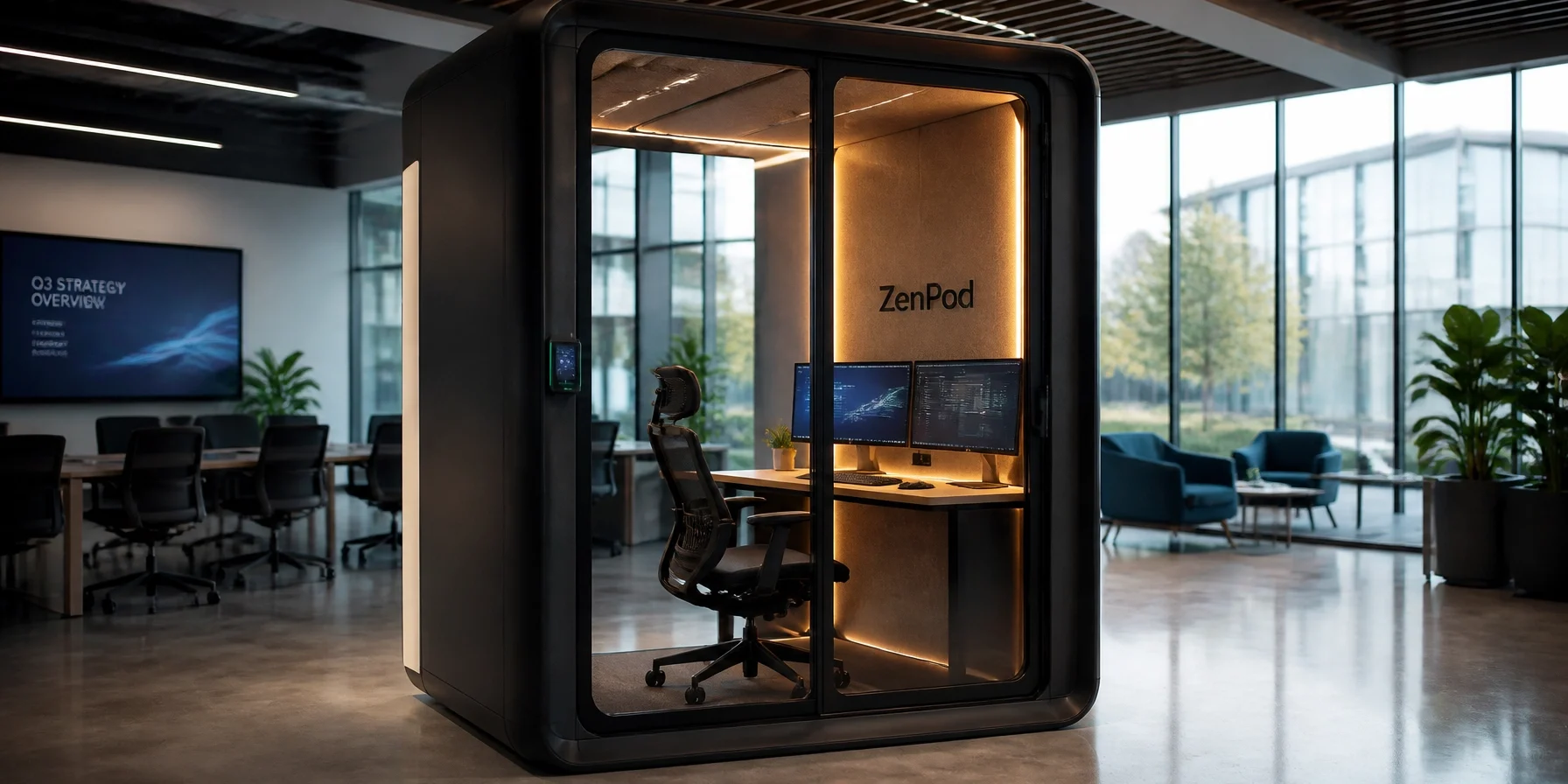
For decades, the "computer lab" has been a staple of educational and corporate environments. We all remember it: rows of identical, beige (later black) monitors, a forest of tangled ethernet cables, fluorescent lights that hummed just a little too loudly, and the distinct smell of warm plastic and ozone. It was a functional space, certainly, but it was also a static one, a "dinosaur" of infrastructure that is increasingly out of step with the way we actually work and learn in the 21st century.
As industries shift toward more specialized, high-stakes digital roles, the physical environment in which we train must evolve. Enter the "Pod." These modular, self-contained, and tech-integrated units are rapidly replacing the traditional lab, offering a level of flexibility and focus that old-school rows of desks simply cannot match. At USA Entertainment Ventures LLC, we see this shift as more than just a trend in office furniture; it is a fundamental reimagining of how we prepare professionals for high-growth career pathways in logistics, cybersecurity, and content creation.
The Extinction of the Traditional Computer Lab
The traditional computer lab was built on the principle of scalability through uniformity. It was designed to get as many people in front of as many screens as possible for the lowest cost per square foot. However, this model suffers from several critical flaws in the modern era:
- Distraction and Noise: In an open lab, the sound of thirty different people typing, whispering, or watching different video tutorials creates a chaotic acoustic environment that hinders deep work.
- Inflexibility: Traditional labs are anchored by fixed wiring and heavy furniture. Adapting the space for a new project or a different type of hardware often requires a full renovation.
- Lack of Privacy: For fields like cybersecurity or sensitive data management, working in an open room where anyone can walk behind your screen is a security risk and a psychological barrier to focus.
The "Pod" infrastructure solves these issues by creating a "room within a room." These units provide sound insulation, integrated power and cooling, and a customizable interior that can be optimized for specific professional tasks. According to recent industry observations, the shift toward "personalized, social, and project-based learning" is better supported by these small, stable environments than by the massive, impersonal labs of the past.
Logistics: From Rows of Desks to Command Pods
The logistics industry has undergone a digital revolution. No longer just about moving boxes from Point A to Point B, modern logistics is a high-tech discipline involving real-time data analytics, global supply chain monitoring, and sophisticated fleet management software.

Training for a career in trucking and logistics management requires an environment that simulates the high-pressure "control room" experience. A modular pod can be outfitted with triple-monitor setups displaying live GIS mapping and inventory databases, allowing a trainee to inhabit the role of a logistics coordinator without the distractions of a noisy classroom.
By using pods, organizations can create "Logistics Hubs" that are mobile and modular. If a company needs to scale its training program at a new facility, they don't need to build a new computer lab; they simply drop in a series of pre-configured pods. This agility is a cornerstone of the consulting services we provide, where we emphasize the importance of infrastructure that grows with the business.
Cybersecurity: The Modern "War Room"
If there is one field where the traditional computer lab is most clearly obsolete, it is cybersecurity. Training the next generation of digital defenders requires an environment that fosters intense focus and collaborative "red-team/blue-team" exercises.

"Cybersecurity is not just a technical skill; it’s a psychological one," notes one industry security expert. "You need an environment that feels high-stakes, where you can focus entirely on the threat in front of you without outside interference."
Pods act as a modern "war room." They can be configured with secure, isolated networks (air-gapped if necessary) and high-performance machines capable of running complex simulations. Two or three trainees can fit comfortably inside a larger pod, working together to solve a breach in a sound-dampened environment that mimics the high-security Operations Centers (SOCs) they will encounter in the workforce. This type of specialized training is particularly relevant for those transitioning through the DOD SkillBridge program, where veterans bring their disciplined, mission-focused mindset to the private sector’s most critical security challenges.
Content Creation: The Creator Pod as a Mini-Studio
The rise of the "creator economy" has turned content creation into a multi-billion dollar industry. From video editing and graphic design to podcasting and live streaming, the demand for high-quality digital media has never been higher. However, a traditional computer lab is perhaps the worst place to record a podcast or edit a high-fidelity video.

The Content Creation Pod is a game-changer for media-focused divisions. These pods are often equipped with:
- Acoustic Treatment: Eliminating echoes and outside noise for professional-grade audio recording.
- Integrated Lighting: Dimmable, high-CRI LED lights for video production.
- High-End Processing Power: Dedicated workstations that can handle 4K video rendering without overheating the entire room.
Instead of a room full of people struggling to hear their own headphones, a pod-based media center allows ten different creators to produce ten different high-quality projects simultaneously, all within the same physical footprint. This efficiency is why we are seeing a massive shift in how media companies and educational institutions are allocating their infrastructure budgets.
Bridging the Gap: DOD SkillBridge and the Future of Work
At USA Entertainment Ventures LLC, we are deeply involved in the DOD SkillBridge recruitment process. This program is designed to help transitioning service members gain civilian work experience during their final 180 days of service. For these individuals, the transition from a structured military environment to a corporate one can be jarring.
Modular pod infrastructure provides a unique benefit here. The transition to civilian roles in cybersecurity or logistics is made smoother when the training environment reflects the professional, mission-oriented spaces of the military. By investing in pods rather than outdated labs, companies participating in SkillBridge can provide veterans with the high-tech, focused environments they need to excel in their new careers.
Why You Should Make the Switch
Transitioning from a traditional lab to a pod-based infrastructure is not just about aesthetics; it is about results. Data from educational researchers suggests that "small, stable groups" (learning pods) lead to better retention and higher engagement. When applied to professional training, the benefits are clear:
- Reduced Overhead: Pods do not require permanent walls or extensive HVAC modifications. They are "plug-and-play."
- Future-Proofing: If your needs change, say, you move from focusing on logistics to content creation: you can simply swap the hardware inside the pod without gutting the building.
- Enhanced Wellbeing: Privacy and noise control reduce stress and burnout, leading to more productive training sessions.

Conclusion: The Road Ahead
The "dinosaur" computer lab is not going to disappear overnight, but its days as the gold standard for technical training are numbered. As we look toward a future defined by remote collaboration, high-stakes digital security, and a creator-driven economy, our physical spaces must become as agile as the software we use.
Whether you are looking to revitalize your corporate training center or you are a veteran seeking a high-tech path through DOD SkillBridge, the shift toward modular pods represents an opportunity to work smarter, focus deeper, and build a more resilient career.
It is time to leave the rows of beige monitors behind and step into the pod. The future of work is modular, and it’s already here.





