
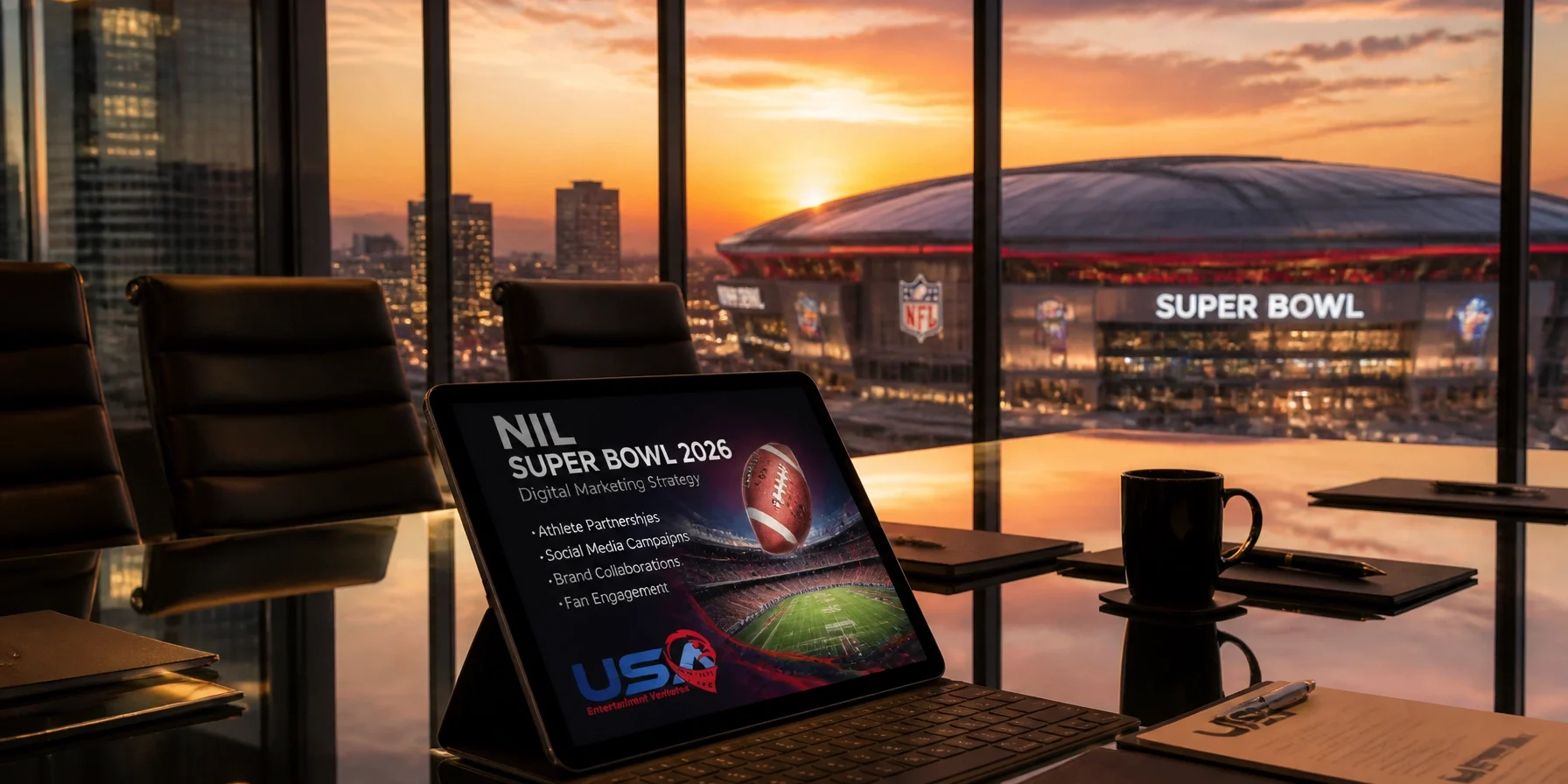
Launching a successful NIL (Name, Image, and Likeness) campaign for Super Bowl 2026 requires a transition from traditional celebrity endorsements to a data-driven, multi-tier athlete portfolio. By building narrative equity months in advance and leveraging real-time second-screen engagement, Fortune 100 brands can bypass the high costs of linear TV and connect directly with Gen Z and Millennial audiences through authentic athlete voices.
The landscape of Super Bowl advertising is undergoing a tectonic shift. While the 30-second linear television spot remains a prestigious hallmark of corporate branding, its dominance is being challenged by a more agile and authentic competitor: the student-athlete. As we look toward Super Bowl LX in 2026, Fortune 100 brands are increasingly recognizing that "winning" the game no longer happens exclusively on the broadcast screen. It happens in the palms of the viewers' hands.
According to recent analysis, over 70% of viewers engage with a second screen, typically a smartphone, during the game. This shift in consumer behavior has paved the way for the NIL revolution, a movement that bridges the gap between corporate giants and the grassroots authenticity of collegiate stars. For the Chief Marketing Officer (CMO), the challenge is no longer just about buying airtime; it is about orchestrating a multi-channel ecosystem where Name, Image, and Likeness (NIL) play a central role.
Step 1: Build Narrative Equity Early
The most common mistake in high-stakes marketing is treating the Super Bowl as a one-day event. To maximize ROI, Fortune 100 brands must begin building "narrative equity" at least six months prior to the kickoff in Santa Clara. Narrative equity is the accumulated trust and recognition a brand earns by being consistently present in an athlete’s journey.
Instead of a sudden "reveal" on game day, successful campaigns utilize NIL athletes to document their season, training regimens, and personal challenges. This long-form storytelling creates a "warm" audience that is already invested in the athlete-brand relationship long before the Super Bowl commercials begin. This approach aligns with the core philosophy at USA Entertainment Ventures LLC, where management and strategic planning are prioritized to ensure every partnership tells a cohesive story.
Step 2: Diversify the Roster with a Portfolio Approach
While a single superstar athlete can provide mass reach, a diversified portfolio of NIL athletes offers deeper cultural penetration. Fortune 100 brands are moving away from "star-only" strategies in favor of multi-tier rosters that include:
- National Stars: For high-level brand awareness and broad reach.
- Regional Heroes: To dominate specific geographic markets and tap into local loyalty.
- Niche Specialists: Athletes in specific sports or with unique social media styles (e.g., humor, tech-savviness, or fashion) to reach segmented demographics.
By leveraging a platform that accesses over 20,000 authentic voices, brands can create a "wave" effect. When hundreds of athletes share a unified message simultaneously, it creates a level of digital saturation that no single 30-second spot can replicate.

Step 3: Synchronize the Second Screen
The true battlefield of Super Bowl 2026 will be the second screen. While the $7 million-plus price tag for a television spot buys passive attention, NIL partnerships buy active engagement. CMOs must ensure their NIL roster is prepared for real-time activation.
This involves establishing "war rooms" where athletes are pre-authorized to react to live game moments, be it a miraculous catch, a controversial call, or a halftime show viral moment. When an athlete your audience trusts reacts to the game in real-time, your brand becomes part of the conversation, not just an interruption. This real-time synchronization is essential for brands looking to address the "dangerous gap in corporate strategy" identified by industry experts at Fortune.
Watch: The NIL Revolution in Action
To understand the full scope of how the sports media landscape is changing, it is vital to align your vision with experienced leadership.
https://www.youtube.com/watch?v=l6J-0zileKE
Step 4: Bridge the Physical and Digital Gap
A truly dominant Super Bowl campaign does not live solely on social media. It integrates the digital influence of NIL athletes with the physical environment of the host city. This is where USA Entertainment Ventures LLC and its specialized services provide a competitive edge.
By combining NIL content with out-of-home (OOH) advertising, such as the Sporttron digital network, which controls ribbon boards and jumbotrons across hundreds of venues, brands can create an immersive experience. Imagine a fan walking into the stadium, seeing an NIL athlete on a digital billboard, and then receiving a push notification from that same athlete with a location-based offer. This "phygital" (physical + digital) approach ensures that the brand owns the entire environment.

Step 5: Measure Real-Time Sentiment and ROI
For the Fortune 100, accountability is paramount. NIL campaigns must be held to the same, or higher, rigorous standards as traditional media buys. Forward-thinking CMOs are moving beyond "vanity metrics" like likes and follows, focusing instead on predictive modeling and fan sentiment analysis.
Key Performance Indicators (KPIs) for a 2026 NIL campaign should include:
- Conversion Attribution: Using athlete-specific promo codes and tracked links to measure direct sales.
- Share of Voice (SOV): Comparing the brand's digital presence against competitors during the Super Bowl window.
- Brand Lift: Utilizing surveys and sentiment analysis to measure changes in brand perception post-campaign.
Expert consultants, such as those found at the USA Entertainment Ventures agency, emphasize that data-driven decision-making is the only way to justify the reallocation of traditional TV budgets toward the burgeoning NIL sector.

Conclusion: The Future of the Arena
The road to Super Bowl 2026 is paved with opportunity for those willing to innovate. The NIL revolution is not a temporary trend; it is a fundamental restructuring of how brands and audiences interact. By following these five steps, building narrative equity, diversifying rosters, synchronizing the second screen, bridging the physical gap, and measuring ROI, Fortune 100 brands can ensure they don't just participate in the Super Bowl; they dominate it.
As the industry evolves, the expertise of veteran leadership becomes the ultimate asset. Aligning your corporate strategy with the 40 years of advertising leadership provided by USA Entertainment Ventures LLC ensures that your brand remains at the forefront of the sports media ecosystem.
Want more insights like this? Subscribe at www.usaentertainmentventures.com.
Questions or partnerships? Call our AI Receptionist at +1 (970) 703-0102.
Dan Kost, CEO
If this helped you, please comment, subscribe, and share.
#Motivation #Branding #Strategy #Marketing #AdvertisingAndMarketing #digitalmarketing #Innovation #Sports #NIL #SuperBowl2026





