
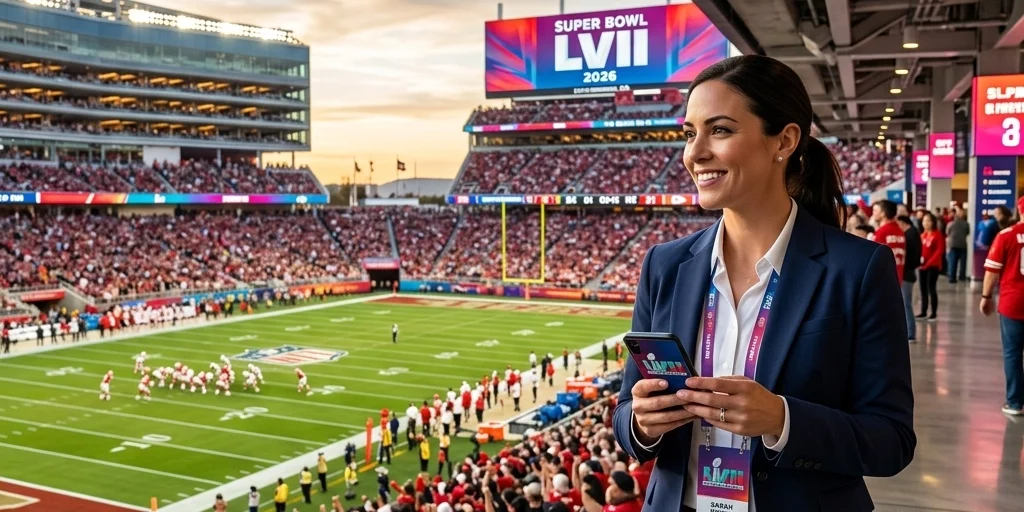
The Super Bowl is more than just a championship game; it is the pinnacle of global marketing, a cultural phenomenon, and a high-stakes arena where brands either achieve legendary status or fade into the noise. On February 8, 2026, the world turned its attention to Levi’s Stadium in Santa Clara, California, for Super Bowl LX. While the Seattle Seahawks claimed a decisive 29–13 victory over the New England Patriots on the field, a different kind of competition was unfolding in the boardrooms and across the digital airwaves.
For business leaders and marketing professionals, "succeeding in the arena" requires more than just a large budget. It demands veteran precision, a deep understanding of Return on Investment (ROI), and the ability to leverage decades of industry experience. At USA Entertainment Ventures LLC, we look at the Super Bowl not just as a four-quarter event, but as a masterclass in business consulting and media strategy.
The Levi’s Stadium Spectacle: A Case Study in Execution
Levi’s Stadium, hosting its second Super Bowl, provided a state-of-the-art backdrop for the event. With an attendance of over 70,000 and a halftime performance by global icon Bad Bunny, the atmosphere was primed for maximum impact. However, the true success of the 2026 event was found in how brands integrated themselves into the fan experience without disrupting the flow of the game.
When we analyze the success of an event of this magnitude, we look at the logistics of the "Super Bowl Experience" held at the Moscone Center and how it integrated with the live broadcast on NBC. For consultants, this highlights a critical lesson: successful engagement requires a multi-platform approach. Whether you are dealing with Sports Media or digital placement, the goal is a seamless transition between the physical arena and the virtual screen.
Dominating the Arena: The 40-Year Legacy
Success in the Super Bowl arena doesn't happen overnight. It is the result of decades of trial, error, and refinement. A key player in this space has been Sports Media, which brought a 40-year legacy to Super Bowl 2026. This level of experience is what differentiates a standard advertising campaign from a dominating presence.
In the world of high-level sports marketing, veteran precision is the only way to guarantee ROI. The margins for error are non-existent when ad spots command record-breaking prices. By leveraging a legacy of four decades, brands are able to navigate the complexities of stadium contracts, broadcast rights, and audience analytics.
As our CEO, Dan Kost, often emphasizes, the "arena" is a place for those who have prepared. It is not enough to show up; you must have a strategy that accounts for every variable. This is why our consulting focuses on established platforms like Buy Sports Media to ensure that every dollar spent is an investment in measurable growth.
Video: Dominating the Arena – Sports Media’s Legacy
To understand the level of precision required to succeed at this level, watch the following overview of how Sports Media dominated the landscape at Super Bowl 2026.
https://www.youtube.com/watch?v=l6J-0zileKE
The ROI Factor: Beyond the Vanity Metrics
In the aftermath of Super Bowl LX, the discussion often shifts to which commercial was the "funniest" or which celebrity appearance was the most "surprising." While these are interesting talking points, they are vanity metrics. True success in the arena is measured by ROI.
For a brand to succeed, the Super Bowl campaign must drive long-term value. This involves:
- Lead Generation: Turning a 30-second spot into a multi-month sales funnel.
- Brand Equity: Establishing a position of authority in the marketplace.
- Cross-Platform Integration: Ensuring that the TV audience follows the brand to social media and mobile platforms.
Many companies make the mistake of spending their entire budget on the airtime itself, leaving nothing for the strategy required to capture the leads generated. This is a common pitfall that we address in our guide on 7 mistakes you’re making with Super Bowl advertising. Without a video strategy to fix these issues, even the most creative ad can fail to deliver a return.

Technical Precision and New Technology
The 2026 Super Bowl saw an unprecedented use of technology to enhance the viewer experience and brand interaction. From augmented reality overlays to localized ad-tech, the "arena" has expanded into the palms of the viewers' hands.
Projects like Sportrons and Zoomedia have paved the way for more interactive and data-driven advertising. Instead of a one-size-fits-all message, brands are now able to tailor their delivery based on real-time data. This precision reduces waste and ensures that the message reaches the most relevant demographic.
For example, when looking at the attendance data from Levi’s Stadium: 70,823 people: the goal for a consultant is to determine how many of those attendees were reached via mobile highway ads or local digital signage before they even entered the stadium gates. This holistic view of the "path to purchase" is what defines modern business consulting in the sports sector.

Avoiding Common Pitfalls
Even with the best technology, failure is possible without a grounded strategy. History is littered with brands that spent millions on a Super Bowl spot and were forgotten by the following Monday. To succeed in the arena, you must avoid the following:
- The "One-and-Done" Mentality: Viewing the Super Bowl as a single moment rather than a launchpad for a larger campaign.
- Ignoring the Data: Failing to track the customer journey from the television screen to the point of sale.
- Lack of Professional Guidance: Attempting to navigate the complex world of sports media without a partner who understands the nuances of the industry.
Business consulting at this level is about mitigating risk. By utilizing established divisions such as USA Entertainment Ventures LLC, companies can lean on a structure designed to support massive scale and high-pressure execution.
Looking Forward: From Super Bowl LX to LXI and Beyond
While Super Bowl 2026 has concluded with the Seahawks' victory and Bad Bunny's historic performance, the cycle of business never stops. The arena is already shifting toward the future. Super Bowl LXI is set for February 14, 2027, at SoFi Stadium in Inglewood, California, followed by Super Bowl LXII in Atlanta in 2028.
The lessons learned in Santa Clara serve as the foundation for the next decade of sports marketing. The brands that succeeded in 2026 were those that prioritized veteran precision over novelty. They understood that the Super Bowl is a marathon, not a sprint, and that the preparation for the next "arena" begins the moment the final whistle blows.
As we look toward the future, the integration of entertainment and business will only deepen. Whether it’s through sustainable initiatives like Pure Box Water or technological advancements in E-Sports Pods, the opportunities for growth are vast for those who are willing to approach the market with a strategic mindset.

Final Thoughts for Business Leaders
Succeeding in the arena of the Super Bowl: or any high-stakes business environment: requires a blend of legacy knowledge and future-focused innovation. It is about understanding the history of the industry while being bold enough to adopt new technologies.
At USA Entertainment Ventures LLC, we believe that every business has the potential to dominate its respective arena. It starts with the right strategy, the right partners, and a relentless focus on ROI. If you are looking to refine your approach and avoid the common mistakes that plague high-level advertising, we invite you to explore our projects and see how four decades of experience can be put to work for your brand.
The arena is waiting. Will you be ready for the next kickoff?





