
Walk into your typical school computer lab today, and you might feel a sudden, inexplicable urge to check your MySpace notifications or see if Shrek is still in theaters. For many institutions, the computer lab remains a hallowed "beige dungeon": a room filled with rows of dusty monitors, tangle-prone wires, and that specific smell of ozone and unwashed backpacks.
While the rest of the world transitioned to the cloud, remote work, and mobile-first productivity, the school computer lab stayed stuck in a 1998 time loop. But here’s the cold, hard truth: the traditional lab isn't just "vintage"; it’s actively failing your students.
At USA Entertainment Ventures LLC, we focus on managing the next generation of talent and logistics. Whether we are discussing workforce strategy and data or recruitment through the DOD Skill Bridge, one thing is clear: the physical environment where students learn to use technology dictates their future success.
Here are 10 reasons your current lab is a relic of the past: and why "Pods" are the modern infrastructure upgrade you actually need.
1. The "Schedule" Stranglehold
In a traditional lab, technology is a destination, not a tool. If a student has a breakthrough in an English essay or a coding project, they have to wait until "Lab Thursday" to act on it. This creates an artificial wall between learning and doing. According to research cited by ICTWorks, innovative teaching happens most when technology is immediately available in the classroom, not locked behind a sign-up sheet in Room 302.
2. Acoustics that Kill Focus
The traditional lab is a cavern of noise. Between the hum of thirty different cooling fans and the person next to you aggressively clicking their mouse, deep work is impossible. High-tech "Pods" solve this with integrated sound-dampening materials, allowing students to actually enter a "flow state" rather than just surviving a headache.
3. The "Shoulder-Surfer" Problem
Privacy is non-existent in rows of monitors. In a world where we are training students for cybersecurity careers, the "shoulder-surfing" layout of a traditional lab is a security nightmare and a massive distraction. Pods provide a semi-private, secure environment where students can focus on sensitive work without thirty pairs of eyes watching their screen.
4. Furniture that Hates Human Backs
Most computer labs are furnished with "bulk-buy" chairs and desks designed for storage, not humans. Ergonomics isn't just a buzzword; it’s a prerequisite for productivity. Modern pods are built with the human frame in mind, allowing for long-form content creation without the back pain of a Victorian coal miner.
5. Spaghetti-Wiring & Maintenance Nightmares
Open-plan labs are a nest of cables. One loose wire can take down an entire row of workstations. This "configuration drift" makes maintenance a full-time burden for IT departments. Pods utilize integrated, hidden cable management systems that make "plug and play" a reality, not a myth.
6. The Hardware Mismatch
Why are we using the same generic PC for a student learning Microsoft Excel and a student rendering a 4K video? Traditional labs offer a "one-size-fits-none" hardware approach. Pods allow schools to create specialized zones: different units optimized for different high-level tasks.
7. No Room for "The Hustle" (Content Creation)
Modern career paths in content creation require more than a keyboard. They need lighting, soundproofing, and adjustable microphone arms. Trying to record a podcast in a traditional lab is like trying to record an album in a subway station.
8. High Overhead, Low ROI
Maintaining 900 square feet of dedicated real estate for a room that is only used 60% of the time is a waste of resources. Modern educational pods are modular; they can be moved, repurposed, or scaled up without a massive construction crew or a permit from the city.
9. Lack of Real-World "Vibe"
Students today are entering a workforce characterized by flexible office spaces and "hot-desking." A traditional lab prepares them for a cubicle farm that doesn't exist anymore. Pods mirror the high-tech, collaborative environments of modern tech hubs and command centers.
10. The Inspiration Gap
Let’s be honest: traditional labs are boring. They look like a place where creativity goes to die. If we want students to solve global logistics problems or defend our digital borders, we need to provide an environment that looks like the future, not the past.
The Solution: Why Pods Are the Upgrade You Need
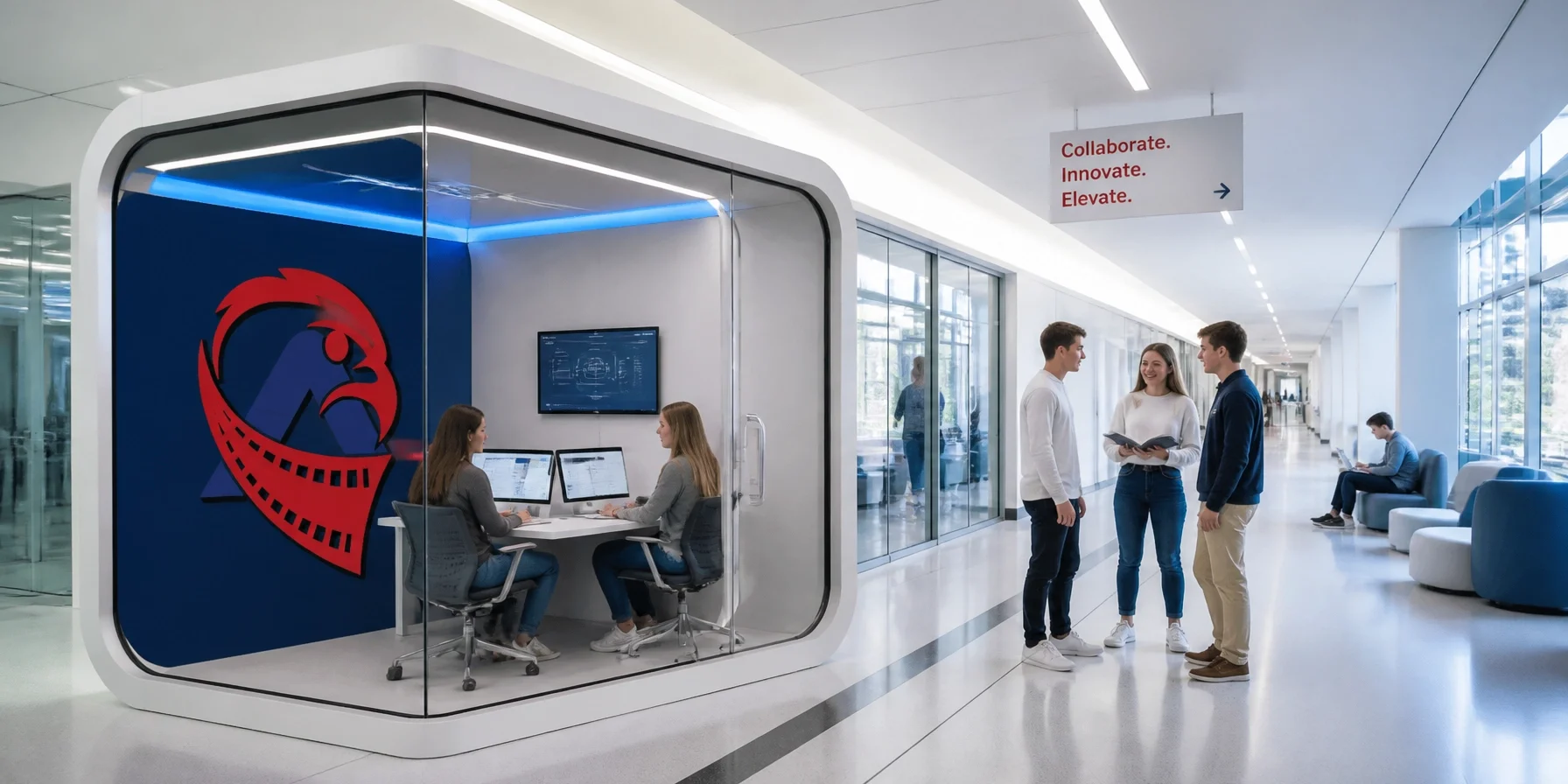
Modular educational pods aren't just "cool furniture." They represent a shift in pedagogy. By moving away from the "lab" and toward "distributed pods," schools can integrate high-end technology directly into the hallways, classrooms, and libraries. This is about building a next-generation talent funnel that prepares students for the specific demands of the 2030s.
Pathway 1: Cybersecurity

As industry experts often note, the best way to learn cybersecurity is in a secure, focused environment. A Cybersecurity Pod provides a "Security Operations Center" (SOC) experience. With integrated privacy glass and multi-monitor setups, students can practice ethical hacking and network defense in a space that feels as serious as the career they are pursuing.
Pathway 2: Content Creation & Media

Content creation is no longer just "making videos": it's a multi-billion dollar industry involving digital marketing, audio engineering, and brand management. A specialized Media Pod offers built-in soundproofing and ring lighting. This allows students to produce professional-grade portfolios without the school needing to build a $100,000 recording studio.
Pathway 3: Logistics & Operational Management

Logistics is the backbone of the modern economy. In a Logistics Pod, students can manage simulated supply chains or track real-time data on large, vertical displays. It creates a "Command Center" atmosphere that is vital for training the next generation of logistics officers and business managers.
Actionable Takeaways for Your School
If you're ready to ditch the beige dungeon, start with these three steps:
- Audit Your Space: Don't just look at the lab; look at your "dead zones" in hallways or the library. These are perfect spots for pods.
- Prioritize Pathways: Don't buy 30 identical PCs. Buy 5 Cyber Pods, 5 Creative Pods, and 5 Logistics Pods.
- Focus on Accessibility: Ensure your tech is where the students are, not where the IT closet is.
The future of work isn't happening in rows. It's happening in focused, specialized, and modular spaces. It’s time your school’s infrastructure caught up.
For more insights on how we are bridging the gap between education and the professional workforce, check out our guide on brand loyalty and the modern fan experience or reach out to our team at USA Entertainment Ventures LLC.





