
Walk into a traditional school computer lab today, and you’ll likely feel a wave of nostalgia: the kind usually reserved for dial-up tones and floppy disks. You know the scene: rows of beige (or maybe dusty black) desktops facing the wall, a tangle of cables that looks like a spaghetti factory exploded, and a singular, buzzing fluorescent light overhead.
For years, this was the peak of educational technology. But in a world where students carry more processing power in their pockets than NASA used to land on the moon, the "Rows of Doom" layout isn't just outdated: it’s actively hindering the very career skills students need to survive in the 2020s.
At USA Entertainment Ventures LLC, we’ve seen the shift firsthand. Managing the transition from generic "typing centers" to specialized, high-impact environments is what we do. If your institution is still clinging to the old-school lab model, here are ten reasons why it’s failing: and why modular "Pods" are the modern, quick-fix solution.
1. The "Rows of Doom" Kill Collaboration
The traditional computer lab was designed for one thing: quiet, individual work. Students face a wall or the back of someone else's head. In the modern workforce: whether you’re in logistics, cybersecurity, or content creation: nobody works in a vacuum. Industry experts consistently note that soft skills like collaboration and team-based problem solving are the highest-demand traits in new hires. Pods, by design, are built for huddling. They turn a solitary task into a team mission.
2. Hardware Refresh Nightmares
Refreshing a 30-station lab is a budgetary punch to the gut. By the time you’ve secured the funding and installed 30 identical PCs, half of them are already on their way to being obsolete. Pods allow for a "lean and mean" approach. Instead of buying 30 mediocre machines, schools can invest in five high-performance pods tailored to specific career pathways. It’s about quality over quantity.
3. The Acoustical Chaos
Have you ever tried to record a professional podcast in a room with 29 other people typing, clicking, and whispering? It’s impossible. Traditional labs have the acoustic properties of a gymnasium. Modern career pathways like content creation require soundproofing and controlled environments.

4. The Network Security "Sandbox" Problem
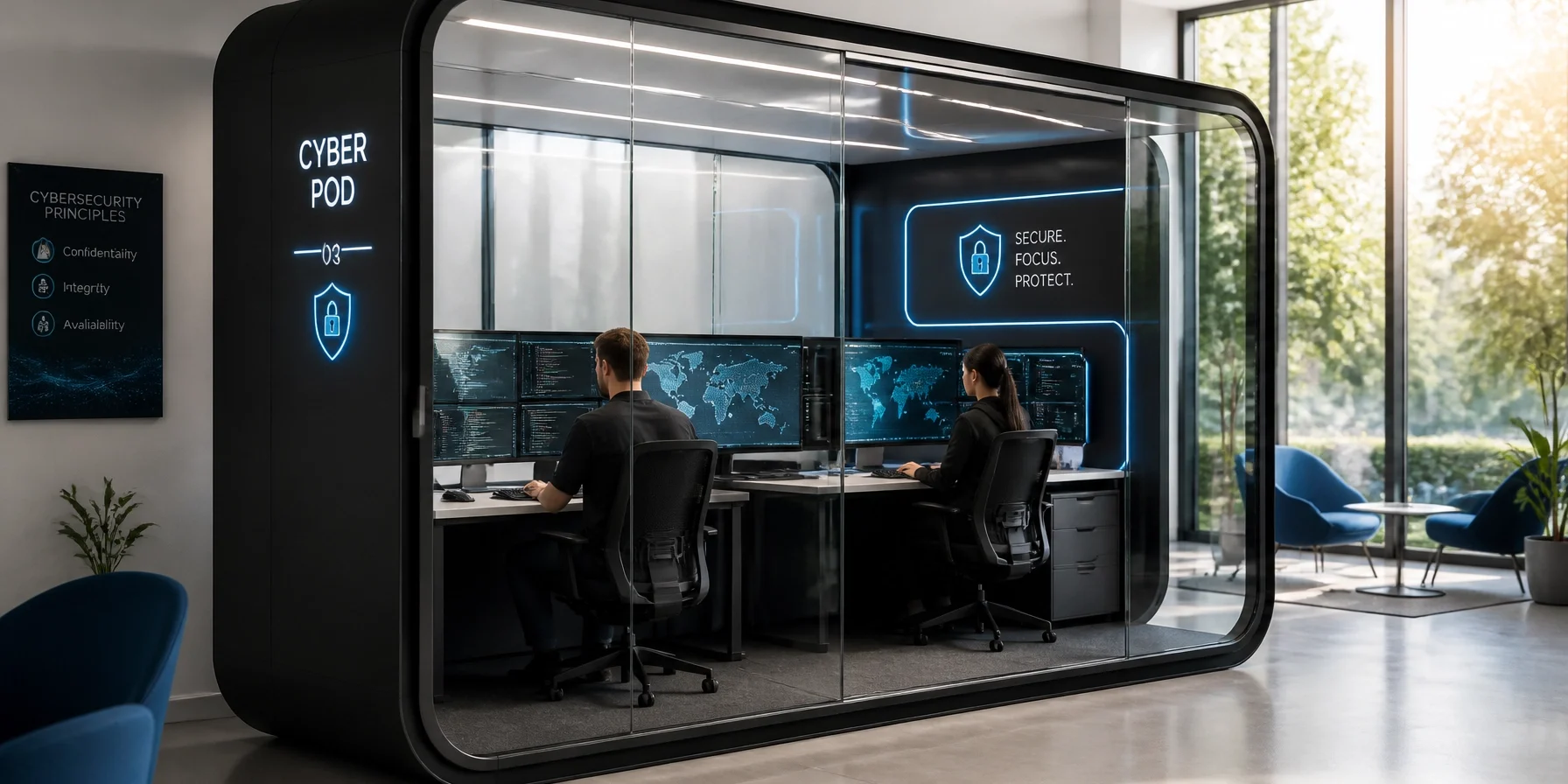
This is a big one for the Cybersecurity crowd. In a standard computer lab, everything is tethered to the main school or corporate network. You can’t exactly ask students to practice penetration testing or deploy a (controlled) malware sample on the same network that handles the payroll and grading systems. Specialized Cyber Pods act as "sandboxes": isolated networks where students can break things safely without bringing down the whole building.
5. Dead Zones and Space Inefficiency
Most traditional labs are only "full" for a few hours a day. The rest of the time, they are expensive, air-conditioned storage lockers for hardware. Modular pods are smaller, more efficient, and can be integrated into existing spaces: lounges, libraries, or even hallways: making the most of every square foot.
6. One-Size-Fits-None
A generic desktop is fine for writing an essay, but it’s a disaster for 4K video rendering or running complex supply chain simulations. When you try to make one lab fit every department, you end up with a lab that serves nobody well. Pods are specialized. You have a Logistics Pod for operations, a Cyber Pod for defense, and a Content Pod for media.
7. The Power and Cooling Struggle
Older buildings weren't designed to have 30 high-powered GPUs running at full tilt in a single room. The result? Tripped breakers and a room that feels like a sauna. Modular pods are self-contained ecosystems with integrated cooling and power management, designed for the high-intensity needs of modern tech.
8. Lack of Physical Integration
Modern careers aren't just about screens; they're about how those screens interact with the physical world. A Logistics student needs to see how IoT (Internet of Things) sensors track a package across a map. Traditional labs don't have the space or the "guts" to integrate physical hardware like scanners, sensors, and server racks.

9. The "Generic Skill" Trap
If a student spends four years in a traditional lab, they learn how to use a computer. If they spend four years in a Career Pod, they learn how to be a Cybersecurity Analyst, a Logistics Manager, or a Producer. The shift from "computer literacy" to "industry competency" is the difference between a job and a career.
10. The Speed of Innovation
Traditional construction takes years. Modular Pods can be deployed in weeks. In the tech world, a two-year delay in building a lab means you’re already a generation behind before the first student sits down. Pods are the "Quick Fix" because they are essentially plug-and-play infrastructure.
The Career Pathway Revolution: Why Pods Win
At USA Entertainment Ventures LLC, we believe that infrastructure should reflect the destination. We focus on business development and DOD Skill Bridge recruitment, where the transition from "learning" to "doing" is critical. Here’s how specialized pods prepare students for the real world:
Cybersecurity: The Digital Frontline
In a dedicated Cyber Pod, learning isn't theoretical. It’s an "offensive and defensive" sport. These pods often feature server racks, hardware firewalls, and specialized networking equipment. Students participate in Red Team/Blue Team exercises, where one group attempts to breach a localized server while the other defends it. This hands-on experience is exactly what recruiters look for in the DOD Skill Bridge program.

Logistics: The Global Nervous System
Logistics is no longer just about driving trucks; it’s about data. A Logistics Pod simulates a global supply chain operations center. Using real-time data feeds and IoT integration, students learn to manage the flow of goods across the globe. This isn't something you can do on a Chromebook in a generic lab. It requires a dedicated environment that mirrors the tools used by global giants like Amazon or FedEx.
Content Creation: The New Corporate Language
Every modern business is now a media company. Whether it's internal training videos, social media marketing, or podcasting, content is the currency of the modern economy. A Content Pod provides the soundproofing, professional lighting, and 8K-ready workstations necessary to turn a "hobby" into a professional skill set. According to recent industry reports, the demand for high-quality video editors and digital storytellers has grown by over 30% in the last five years alone.
The Bottom Line
The "Old-School" computer lab was a product of its time: a time when computers were rare and needed to be tethered to a specific room. Today, the computer is everywhere. What’s rare is the environment to use that technology professionally.
Swapping your outdated lab for modular pods isn't just an interior design choice; it’s a commitment to the future of your students. By creating specialized, collaborative, and industry-aligned spaces, you’re providing the "quick fix" that leads to long-term career success.
Ready to see how pods can transform your space? Check out our latest insights on modernizing educational environments and start building the bridge to the next generation of logistics, cyber, and media professionals.





