
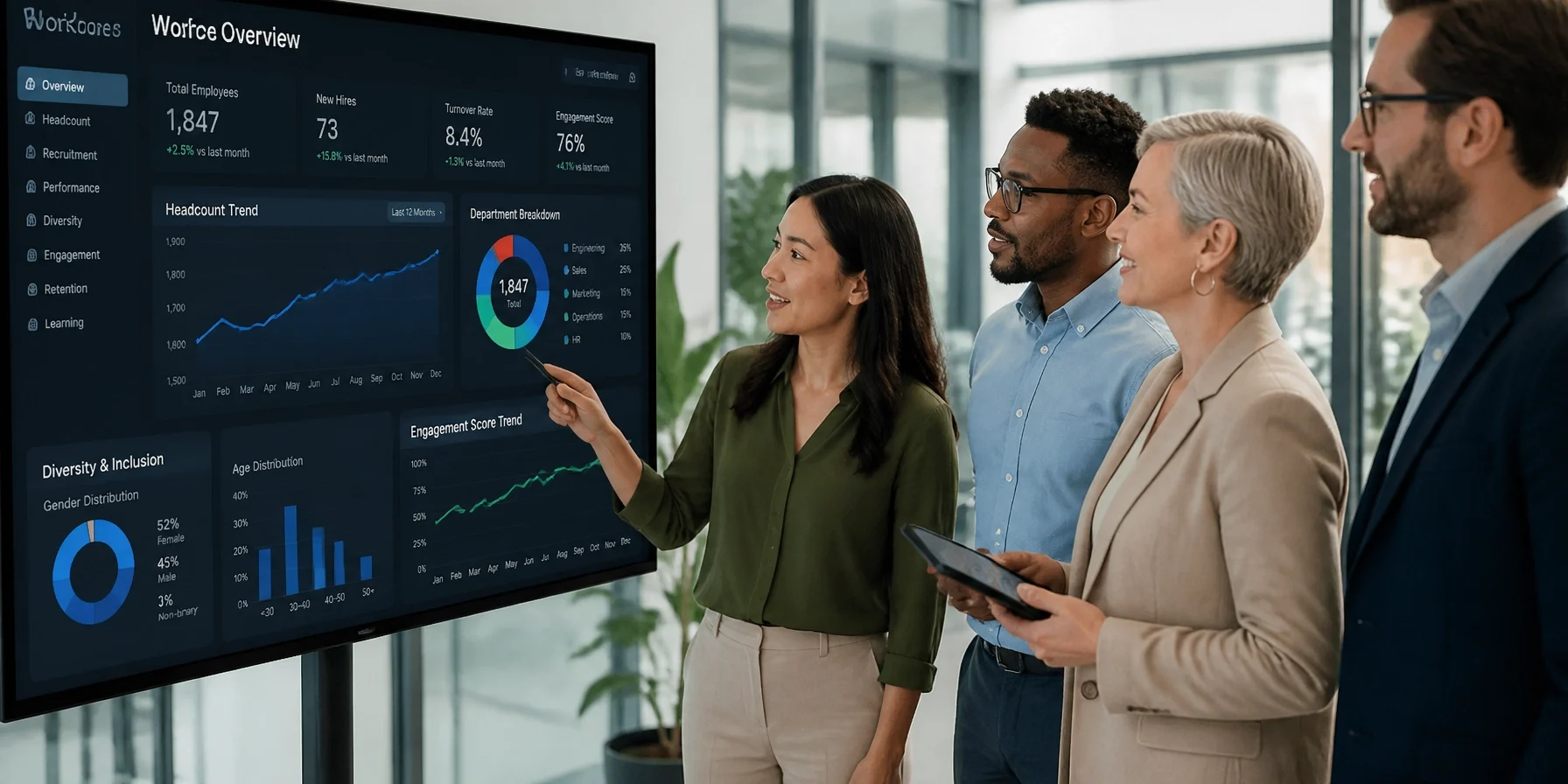
In the current economic landscape, the traditional methods of talent acquisition and workforce development are increasingly insufficient. For executives, the challenge is no longer just finding personnel; it is about cultivating a "future-ready" workforce that can navigate a landscape dominated by rapid digital transformation, complex media environments, and the emerging economy of Name, Image, and Likeness (NIL).
The shift toward data-driven decision-making is not merely a trend: it is a requirement for organizational resilience. According to recent industry insights, organizations that systematically measure, benchmark, and invest in workforce intelligence are significantly better positioned for long-term growth. To lead effectively, executives must transition from intuition-based management to a strategy grounded in real-time analytics.
This guide outlines five actionable steps for executives to leverage data dashboards and specialized educational frameworks: such as NIL literacy and media education: to build an agile, future-proof organization.
Step 1: Establish a Centralized Workforce Intelligence Dashboard
The first step in building a future-ready workforce is the implementation of a centralized data dashboard. Executives often operate with fragmented information, making it difficult to see the "big picture" of their talent pipeline. A robust dashboard acts as a strategic "control panel," providing visibility into skills gaps, learning progress, and market alignment.
By integrating data from HR systems, learning management platforms, and external labor market trends, leadership can identify exactly where the organization stands. For instance, understanding how dashboards turn students into future-ready hires allows institutions and companies to bridge the gap between academic preparation and professional demand.
Actionable Takeaway:
- Audit Current Data Sources: Identify where your workforce data lives (LMS, HRIS, or external spreadsheets).
- Define Key Performance Indicators (KPIs): Focus on metrics such as the "Skills Gap Index," which measures current proficiency versus the technical and soft skills required for 2026 and beyond.
- Implement Real-Time Tracking: Move away from annual reviews in favor of live data feeds that reflect ongoing upskilling efforts.

Step 2: Integrate NIL Education to Empower Personal Branding
The emergence of Name, Image, and Likeness (NIL) has fundamentally changed the relationship between individuals and their professional identities. While once a concern primarily for collegiate athletics, the principles of NIL: personal branding, contract literacy, and digital reputation management: are now essential for the modern professional workforce.
Executives should view NIL education as a tool for empowerment. By teaching employees and students how to manage their personal brands, organizations foster a culture of ownership and accountability. This is particularly relevant when navigating high-stakes environments. For context, understanding the ultimate guide to NIL platforms can provide a blueprint for how individual brand power can be harnessed for broader organizational success.
Actionable Takeaway:
- Launch NIL Workshops: Provide training on the legal and ethical aspects of personal branding.
- Link Brand to Business: Encourage employees to align their personal professional growth with the company’s strategic goals.
- Monitor Engagement: Use your dashboard to track completion rates of NIL and reputation management certifications.

Step 3: Prioritize Media Literacy Outcomes
In an era of misinformation and digital saturation, media literacy is no longer an optional skill; it is a critical competency for risk management and communication. For a workforce to be "future-ready," it must be capable of discerning credible information, understanding platform dynamics, and communicating effectively across digital channels.
Data dashboards should track media literacy outcomes as a primary metric. High levels of media literacy within a team correlate with better crisis management and more effective external communication. As highlighted in workforce strategy best practices, ignoring the impact of digital communication trends is a common mistake that data-driven insights can rectify.
Actionable Takeaway:
- Assess Baseline Literacy: Use surveys and assessments to determine the current media literacy levels across departments.
- Implement "Media-First" Training: Focus on digital storytelling, data ethics, and the identification of synthetic media (AI-generated content).
- Measure Outcomes: Track the reduction in communication-related errors and the increase in engagement with company digital assets.
Step 4: Scale Through "Learning Corridors" and Modular Environments
To maintain a competitive edge, the physical and digital environments where learning takes place must evolve. The concept of "Future-Ready" schools and offices involves moving away from static structures toward modular, tech-enabled spaces. These "learning corridors" facilitate just-in-time coaching and collaborative problem-solving.
For example, the transition from traditional computer labs to modular pods for cyber careers demonstrates how specialized environments can accelerate skill acquisition. These spaces, when connected to your workforce dashboard, provide tangible data on how environment impacts learning efficiency and output.
Actionable Takeaway:
- Invest in Modular Infrastructure: Transition static office or classroom spaces into flexible, technology-rich pods designed for specific skill sets (e.g., a data analytics pod or a media production suite).
- Connect Space to Data: Use sensors or check-in data to see which learning environments yield the highest certification rates.
- Optimize the Talent Funnel: Use these specialized environments to attract and retain high-potential talent who prioritize modern workspace amenities. Reference the next generation talent funnel for more on optimizing this process.

Step 5: Execute with Strategic Oversight and ROI Mapping
The final step is the most crucial for executives: ensuring that data insights lead to concrete business outcomes. A dashboard is only as valuable as the decisions it informs. Leadership must establish a governance framework that reviews workforce data quarterly to adjust investments in upskilling, recruitment, and technology.
By mapping the ROI of educational programs: whether it’s NIL training or media literacy: executives can justify further expansion. According to reports from Future Work Systems, organizations that align their dashboards with strategic labor market demand see a 20% higher efficiency in talent retention. USA Entertainment Ventures LLC serves as an anchor for this transition, providing the expertise needed to turn these data points into a cohesive workforce strategy.
Actionable Takeaway:
- Conduct Quarterly Reviews: Meet with department heads to review the "Skills Heatmap" and reallocate training budgets based on identified gaps.
- Benchmark Against the Market: Use external data sources to ensure your internal skill levels match or exceed industry standards.
- Focus on Longitudinal Success: Look at the long-term career progression of employees who engage with the "Future-Ready" framework to prove the program's value.

Conclusion: Leading the Future-Ready Charge
Building a future-ready workforce is a continuous journey, not a one-time initiative. By leveraging data dashboards, embracing NIL education, and prioritizing media literacy, executives can transform their organizations into resilient, forward-thinking entities.
The evidence is clear: data-driven strategies reduce the uncertainty of talent management and provide a clear roadmap for growth. As an executive, your role is to act as the architect of this new landscape, ensuring that your team has the tools, the education, and the environment they need to succeed in the economy of tomorrow.
For more insights on optimizing your workforce and exploring specialized recruitment solutions, visit USA Entertainment Ventures LLC to see how we are anchoring the next generation of "Future-Ready" institutions.





