
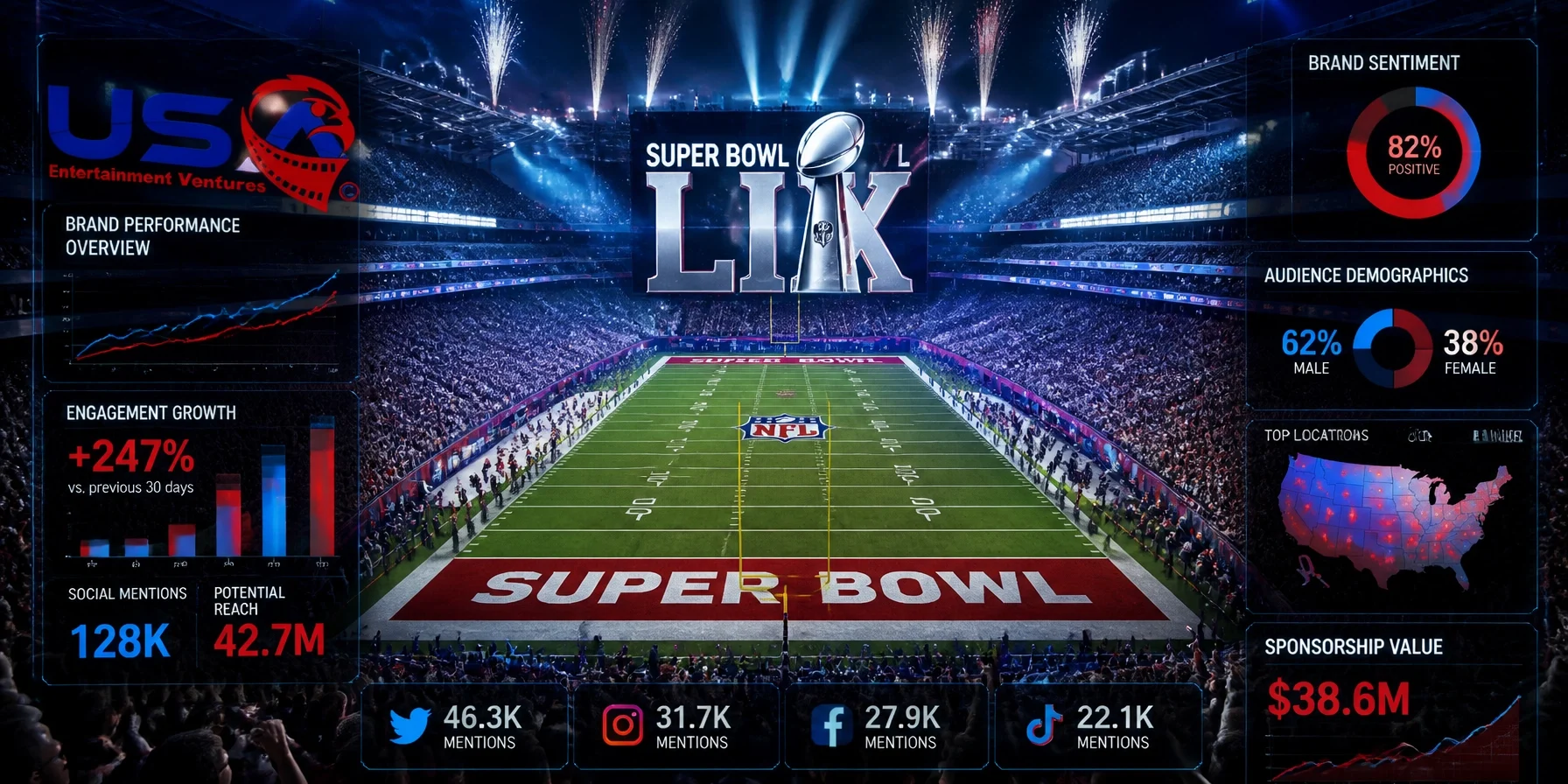
For Fortune 100 brands, the Super Bowl represents the undisputed pinnacle of the advertising calendar. It is a moment where more than 100 million viewers converge on a single broadcast, creating a rare opportunity for mass cultural impact. However, as we look toward the 2026 season and beyond, the traditional "big game" strategy is facing a crisis of efficiency. With 30-second spots now regularly exceeding the $7 million mark: excluding production costs and celebrity fees: the cost-to-conversion ratio is becoming increasingly difficult to justify using legacy metrics alone.
While the spectacle remains unmatched, the underlying mechanics of consumer attention have shifted. The "One-and-Done" TV spot is no longer sufficient to move the needle for a sophisticated audience that consumes media across a fragmented digital ecosystem. To maintain market leadership, brands must look toward the emerging Name, Image, and Likeness (NIL) revolution to bridge the gap between traditional broadcast reach and modern, authentic engagement.
The Disconnect in Modern Sports Marketing
The primary challenge facing today's CMO is not a lack of reach, but a lack of resonance. Data from recent Super Bowl cycles suggests that while "likeability" and "brand recognition" remain high for nostalgia-driven ads, these metrics do not always translate into long-term brand equity or immediate sales lift among younger demographics.
At USA Entertainment Ventures LLC, we have observed that the most successful campaigns are those that move beyond the screen and into the community. By integrating NIL strategies, brands can transform a passive viewing experience into an active, multi-channel dialogue.
1. Diminishing ROI of the "One-and-Done" TV Spot
The traditional approach treats the Super Bowl as a isolated event. A brand spends millions on a single creative asset that airs once, hoping for a "viral" moment. However, in an era of digital saturation, the half-life of a TV commercial is shorter than ever. Without a robust "surround strategy" that includes social, regional, and experiential layers, the investment often fails to produce a sustained return on investment (ROI).
2. The Celebrity Authenticity Gap
Fortune 100 brands frequently lean on A-list Hollywood celebrities to carry their Super Bowl creative. While these figures bring name recognition, they often lack the deep, grassroots connection that sports fans crave. In contrast, collegiate athletes represent "authentic voices" that define local and regional cultures. As noted in recent industry reports, Gen Z and Alpha consumers are significantly more likely to trust a peer-like athlete than a distant Hollywood star.
3. Missing the Gen Z and Alpha Demographics
Traditional broadcast television is no longer the primary medium for younger generations. These cohorts are "second-screening" during the game, engaging with TikTok, Instagram, and specialized fan forums. If your branding strategy is confined to the 30-second TV window, you are effectively ignoring the future of your consumer base. NIL athletes, as digital natives, provide the bridge to these essential demographics.
4. Neglecting the "Surround Strategy"
A successful Super Bowl campaign must start weeks before kickoff and continue long after the final whistle. Brands often exhaust their budgets on the media buy, leaving little for the pre-game hype and post-game retention. A decentralized NIL roster allows for a distributed content strategy that builds momentum on campus and in regional markets well in advance of the game.

5. Inability to Personalize at Scale
Mass broadcast is the antithesis of personalization. A Super Bowl ad is a "one size fits all" message delivered to a diverse audience. By leveraging an NIL platform: such as the one offered through our partners at Sports Media: brands can tap into over 20,000 athletes to deliver localized, personalized messages that resonate with specific fan bases and geographic regions.
6. The Noise Factor and Content Saturation
During the Super Bowl, brands compete not only with each other but with the game itself and the surrounding spectacle. This "noise" makes it difficult for any single message to stick. Research indicates that "surround" content: delivered via trusted athlete channels: often achieves higher engagement rates because it reaches the consumer in a less cluttered, more personal environment.
7. Lack of Regional Relevance
National campaigns often overlook the power of local pride. A Fortune 100 brand may be a global entity, but it sells its products in specific communities. Using NIL talent allows a brand to be "local" at a national scale. Whether it’s a star quarterback in the SEC or a standout gymnast in the Pac-12, these athletes carry a level of regional influence that a national TV spot cannot replicate.
8. Poor Post-Game Long-Tail Engagement
The Monday after the Super Bowl usually marks the end of the campaign for most advertisers. This is a missed opportunity. NIL athletes can provide the "long-tail" engagement needed to convert awareness into loyalty. Through follow-up content, behind-the-scenes access, and community-focused initiatives, the brand relationship is extended far beyond the game day excitement.
9. Underutilizing Predictive Modeling and Data
Many branding strategies are still based on "gut feeling" and creative intuition. At USA Entertainment Ventures, we emphasize the importance of marketing analytics and data-driven strategy. Modern NIL platforms use predictive modeling and fan sentiment analysis to prove ROI from day one, ensuring that every dollar spent is optimized for maximum impact.
10. Static Messaging in a Dynamic Market
The world changes quickly between the time a Super Bowl ad is produced and when it airs. A static TV spot cannot be easily adjusted to reflect current trends or sudden shifts in consumer sentiment. An NIL-led strategy is inherently modular; creative can be swapped, messaging can be updated, and athletes can react in real-time to game-day events, making the brand feel alive and responsive.
The NIL Solution: Bridging the Gap
The transition from traditional advertising to an athlete-led ecosystem is not just a trend; it is a fundamental shift in how business consulting and marketing management must operate. As highlighted in our latest video overview, the integration of NIL talent allows brands to "dominate the arena" by owning the environment where fans live, work, and play.
By leveraging the power of collegiate influencers, Fortune 100 brands can achieve what was once thought impossible: mass reach with micro-targeting precision. This approach aligns perfectly with our core mission at USA Entertainment Ventures LLC, where we manage complex divisions across media, technology, and sports to drive sustainable growth for our clients.
Implementing Actionable Change
For brands looking to evolve their Super Bowl strategy, the path forward involves three practical steps:
- Diversify the Talent Roster: Move beyond the single "hero" celebrity. Build a roster of NIL athletes who represent the diverse geographies and demographics of your target market.
- Integrate Digital and Physical Touchpoints: Use NIL voices to drive traffic to digital platforms (apps, loyalty programs) while using "out-of-home" assets like stadium ribbon boards and jumbotrons to reinforce the message.
- Prioritize Measurable ROI: Shift from "vanity metrics" to hard data. Use unique tracking links and sentiment analysis to understand exactly how each athlete is contributing to the bottom line.

Looking Toward the Future
The future of sports marketing belongs to those who can master the intersection of high-scale entertainment and grassroots authenticity. As we project these trends into the 2026 season and beyond, it is clear that the NIL revolution is only just beginning. Brands that adopt these strategies today will not only win the Super Bowl "ad war" but will secure a lasting place in the hearts and minds of the next generation of consumers.
At USA Entertainment Ventures LLC, we are committed to helping our partners navigate this complex landscape. From our DOD skill bridge recruitment initiatives to our comprehensive event management divisions, we provide the infrastructure necessary for brands to lead in an ever-changing world.

To explore how your brand can leverage the NIL revolution for the next big game, we invite you to schedule a consultation with our expert team. Together, we can turn your vision into a measurable, high-impact reality.





