
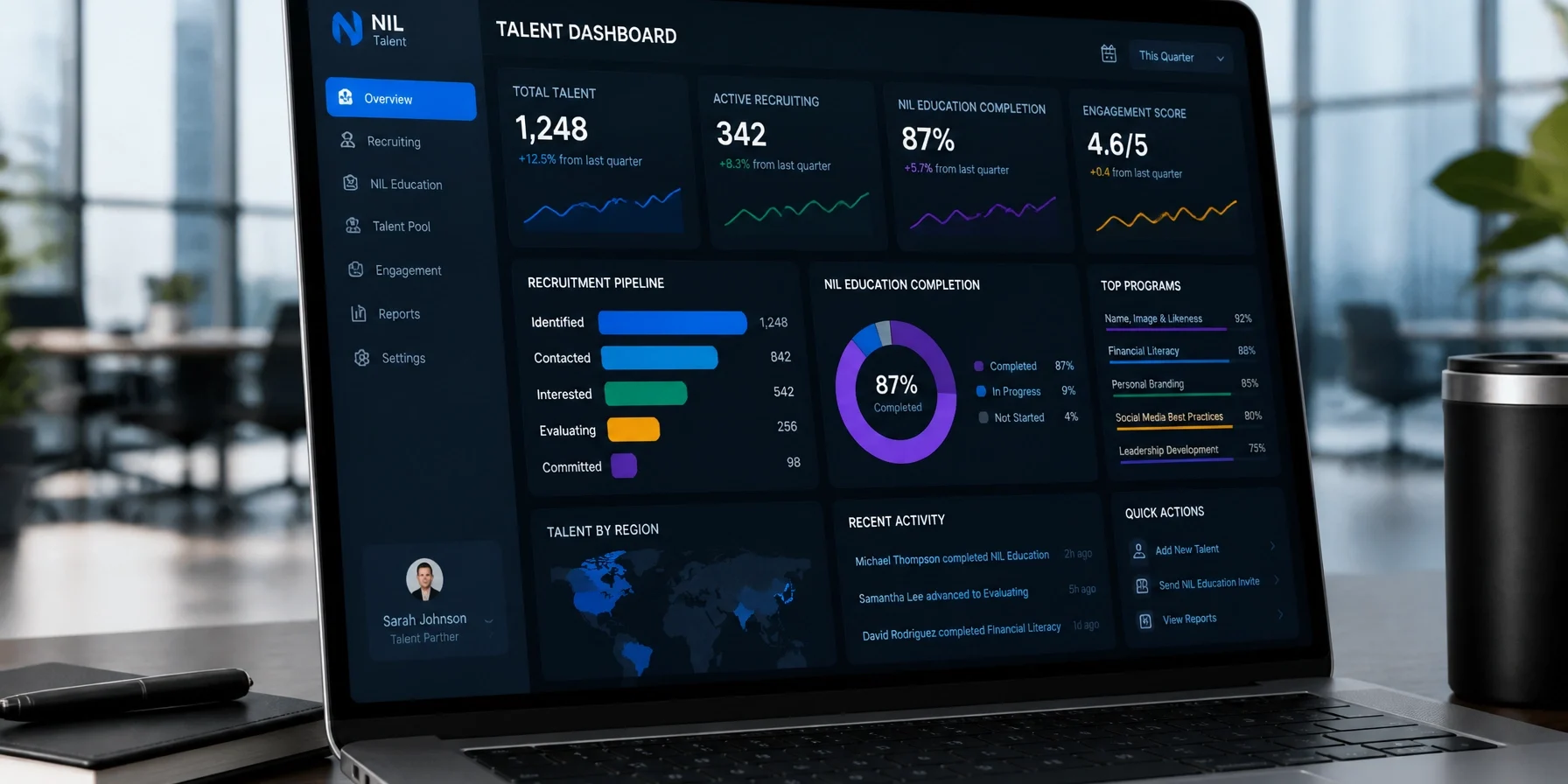
In the rapidly evolving landscape of 2026, talent acquisition is no longer just about filling open requisitions; it is about managing a complex ecosystem of human capital. For executives and school administrators, the ability to visualize this ecosystem in real-time is the difference between leading the market and reacting to it. Fortune 100 companies have long utilized sophisticated data dashboards to monitor pipeline health, but the tools once reserved for global conglomerates are now accessible to "Future Ready" schools and specialized recruitment programs.
At USA Entertainment Ventures LLC, we have observed that the most successful organizations are those that can synthesize disparate data points: from DOD SkillBridge recruitment metrics to Name, Image, and Likeness (NIL) education outcomes: into a single, actionable view. This post outlines how you can build an executive-grade talent dashboard in just five minutes, positioning your institution or business as a leader in the next generation of career readiness.
The Paradigm Shift: From Roster Spots to Talent Pipelines
Historically, schools viewed student-athletes through the lens of performance, and businesses viewed veteran recruitment through the lens of corporate social responsibility. Today, those silos are dissolving. Student-athletes are now entrepreneurs managing their personal brands via NIL, and transitioning service members are a primary source of high-skilled, leadership-ready talent through programs like DOD SkillBridge.
A "Future Ready" school is one that recognizes these parallels. By integrating media literacy and NIL education into the curriculum, schools are not just preparing students for a season; they are preparing them for a career. However, without a way to track the effectiveness of these programs, stakeholders are flying blind. Data dashboards provide the "single source of truth" necessary to prove ROI and refine strategies.

Step 1: Minute 1 – Defining the "Holy Trinity" of Data
The first step in creating a Fortune 100-style dashboard is deciding what to measure. To maintain executive simplicity, we focus on three core pillars:
- SkillBridge Recruitment Pipeline: This tracks the transition of high-value military talent into civilian roles. Key metrics include the number of active fellows, conversion-to-hire rates, and the diversity of skill sets being acquired.
- NIL Education Outcomes: For schools and athletic departments, it is essential to track the percentage of students who have completed mandatory NIL training. This isn't just about compliance; it's about risk mitigation and brand safety.
- Media Literacy Outcomes: As digital presence becomes a primary component of a professional's resume, tracking a student's proficiency in media literacy: social media ethics, contract understanding, and digital communication: is a leading indicator of long-term career success.
By clustering these metrics, you move from a "list of names" to a strategic "talent map."
Step 2: Minute 2 – The Infrastructure (Simple Integration)
You do not need an enterprise-scale IT department to build a powerful dashboard. Most Fortune 100 teams use accessible Business Intelligence (BI) tools like Power BI, Excel, or Airtable. The goal in this minute is to create three simple tabs in your data source:
- Talent_Pipeline: Columns should include Name, Source (e.g., SkillBridge, Campus), Stage (e.g., Evaluated, Offer, Commit), and Skill Category.
- NIL_Activity: Columns for Term, Number of Deals, Average Deal Value, and Top Categories.
- Education_Completion: Columns for Module Name (e.g., Media Literacy 101), Completion Rate, and Quiz Scores.
As industry experts suggest, "The most effective dashboards aren't the ones with the most data, but the ones with the most signal." By structuring your data this way, you ensure that every chart you create later will have a clear purpose.
Step 3: Minute 3 – Generating KPI Cards
Minute three is where your data starts to look like a "command center." In your BI tool, create "KPI Cards" for your most critical numbers. These should be large, bold figures that an executive can read in three seconds.
- Total Prospects: Total count of your SkillBridge and campus pipeline.
- NIL Education Rate: Percentage of eligible participants who are fully certified.
- Pipeline Health: A ratio of "Offers Made" vs. "Offers Accepted."
These cards provide the immediate context needed during board meetings or executive briefings. They answer the question, "Are we on track?" before the question is even asked.

Step 4: Minute 4 – Visualizing the Funnel
In minute four, add 3–4 simple charts to tell a story. Fortune 100 dashboards prioritize flow and bottlenecks.
- The Recruitment Funnel: A funnel chart showing the drop-off from "Initial Contact" to "Final Hire." If you see a large drop-off between "Interview" and "Offer," you know where to focus your management efforts.
- Source Effectiveness: A bar chart comparing where your best hires come from. Does the SkillBridge program yield higher retention than traditional job boards? The data will tell you.
- Risk vs. Education: A scatter plot comparing NIL activity with education completion scores. This helps identify high-activity students who might need more intensive media literacy support.
Step 5: Minute 5 – Filters and "Fortune 100 Polish"
The final minute is dedicated to usability. Add "Slicers" or filters that allow users to view the data by Sport, Department, Grad Year, or Region. This interactivity transforms a static report into a dynamic tool that can be used by different stakeholders.
A recruiter might filter for "Active SkillBridge Fellows," while a school administrator might filter for "Freshman Media Literacy Scores." This flexibility is a hallmark of USA Entertainment Ventures LLC’s approach to management: ensuring that every user has exactly what they need to make a decision.
Why "Future Ready" Schools are Winning
The transition to a data-driven model is not just a trend; it is a necessity for the "Future Ready" school. According to the Future Ready Schools framework, integrated and interoperable data systems are foundational to modern learning. By tracking NIL and media literacy outcomes alongside recruitment data, schools can demonstrate that they are producing candidates who are not only skilled but also brand-conscious and digitally literate.
For businesses, this provides a "vetted" talent pool. When a recruiter looks at a dashboard and sees that a SkillBridge candidate or a student-athlete has completed advanced media literacy modules, the "risk" of that hire drops significantly. This is the new standard of talent management.

Actionable Takeaways for Executives
- Audit Your Data Points: Before building, ensure you are collecting the right info on NIL and SkillBridge activity.
- Start Small: Build your first dashboard for a single department or cohort to test the logic.
- Prioritize Education Metrics: Don't just track the money in NIL; track the education behind it. Education is the best predictor of brand safety.
- Engage Experts: Managing these complex divisions requires specialized knowledge. USA Entertainment Ventures LLC specializes in bridging the gap between recruitment and management.
The Future of the Talent Ecosystem
As we look toward the end of the decade, the organizations that thrive will be those that treat talent as a continuous, data-backed lifecycle. By spending five minutes today to set up a dashboard, you are laying the groundwork for years of optimized recruitment and educational outcomes.
The "Future Ready" school isn't just an idea: it’s a data-driven reality. Whether you are managing a DOD SkillBridge program or an athletic department navigating the complexities of NIL, the power of visibility cannot be overstated. It is time to move beyond spreadsheets and start leading with a Fortune 100 perspective.





