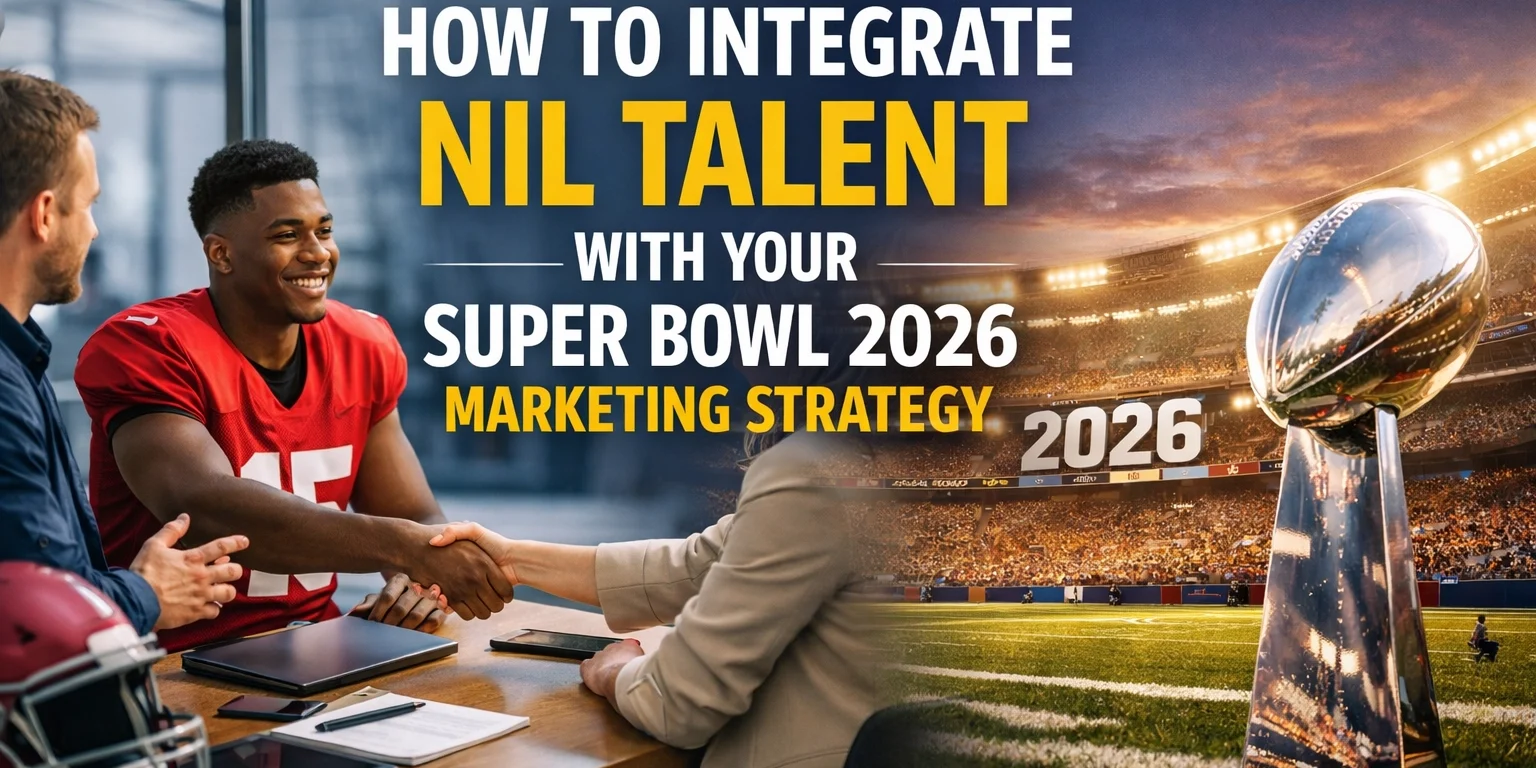
The Super Bowl remains the ultimate pinnacle of American advertising. However, as we look toward the remainder of 2026 and the planning cycles for the years ahead, the traditional 30-second television spot is no longer the sole arbiter of a campaign's success. For Fortune 100 brands, the integration of Name, Image, and Likeness (NIL) talent has shifted from a "niche experiment" to a strategic necessity.
At USA Entertainment Ventures LLC, we have observed a fundamental transformation in how audiences consume the Big Game. The "NIL Revolution" is not just about college athletes getting paid; it is about bridging the gap between massive national broadcasts and the highly personal, localized digital ecosystems where Gen Z and Millennial consumers live.

The NIL Revolution: Bridging the Gap at the Super Bowl
To understand why NIL is critical for Super Bowl 2026, one must look at the data. Traditional commercials offer unmatched reach but often suffer from "one-and-done" engagement. Conversely, NIL partnerships provide a "long-tail" effect. When a brand integrates a college athlete into its Super Bowl strategy, it is not just buying a face; it is buying into a community.
Watch our detailed breakdown on the NIL Revolution here:
https://www.youtube.com/watch?v=l6J-0zileKE
This video outlines how the landscape has shifted and why the most successful brands are no longer just "buying ads": they are building ecosystems.
The Core Integration Framework: A Three-Phase Timeline
To maximize ROI, Fortune 100 brands must treat NIL talent as core components of the campaign from the outset. We recommend a three-phase timeline that extends the Super Bowl from a single Sunday into a month-long brand event.
Phase 1: Pre-Game Hype (January 15 – February 7)
The weeks leading up to the game are vital for building anticipation. During this window, NIL partners should create behind-the-scenes content that previews the national campaign. This allows the brand to "leak" its messaging in an organic way, using the athlete's voice to build curiosity among millions of followers before the television ad even airs.
Phase 2: Real-Time Game-Day Commentary
On game day, NIL athletes serve as digital ambassadors. While the national audience watches the broadcast, the athlete’s followers are watching their social feeds. Real-time commentary and reaction videos provide a layer of authenticity that a polished commercial cannot replicate. This "second screen" engagement ensures that your brand remains the center of conversation throughout the entire four quarters.
Phase 3: Post-Game Sustainability
The impact of a traditional ad often fades by Monday morning. However, NIL content can sustain engagement for weeks after the game ends. Post-game analysis, "get the look" content, or athlete-led recaps ensure that the heavy investment made in the Super Bowl continues to yield impressions and conversions long after the trophy is hoisted.

Strategic Athlete Selection: The Portfolio Approach
A common mistake made by major organizations is prioritizing only the "Heisman-level" stars. While high-profile athletes offer significant reach, the most effective Super Bowl 2026 strategies utilize a portfolio approach.
This involves pairing one or two national stars with a network of "mid-tier" partners. Data suggests that mid-tier athletes: those with 50,000 to 200,000 highly engaged followers: often deliver deeper market penetration. These athletes possess authentic connections with niche audiences that Fortune 100 brands often struggle to reach through traditional media.
Furthermore, geographic flexibility is a major advantage. By partnering with regional college athletes in specific markets, a brand can establish a credible local presence. A star quarterback at a major state university can often drive more localized action than a retired NFL legend, and at a fraction of the cost. This allows brands to maintain a presence both in the Super Bowl host city and in key consumer hubs across the country.
Authenticity Over Scripts: The Co-Creation Model
For a Super Bowl campaign to resonate, it must feel genuine. Fortune 100 brands often fall into the trap of over-scripting NIL talent, which results in "cringe-worthy" content that younger audiences immediately dismiss.
The solution is co-creation. Rather than placing athletes in rigid, pre-scripted advertisements, brands should allow partners to maintain their unique voice. When an athlete integrates a brand naturally into their existing content ecosystem, the engagement rates are significantly higher. According to recent industry research, co-created content generates substantially higher brand affinity with Gen Z audiences compared to traditional endorsements.

Financial Logic and Equity Stakes
As the NIL market matures, the structure of these deals is evolving. We are seeing a shift toward partnerships that include equity stakes or performance-based incentives. Data confirms that athletes with equity stakes produce content at higher frequencies and demonstrate greater creativity in their promotional approaches. In fact, these arrangements have been shown to generate 40-60% higher audience interaction rates compared to fixed-fee contracts.
For a Fortune 100 brand, this means your NIL partners are not just "hired guns" for a weekend: they are stakeholders in your success. This alignment of interests is crucial for the high-stakes environment of a Super Bowl campaign.
Infrastructure for Sustained Impact
Looking beyond the 2026 game, forward-thinking organizations are using the Super Bowl as a testing ground for long-term talent development. At USA Entertainment Ventures LLC, we advocate for the creation of mobile content facilities at Super Bowl fan zones.
These "content hubs" allow NIL athletes to produce professional-grade material alongside communications students and brand experts. This transforms a standard marketing expense into a talent development investment. You aren't just creating an ad; you are building a future-ready pipeline of creators who understand your brand's DNA.
Many of our partners at 360 Sports Media and Sports Media are already implementing these types of high-tech, high-touch infrastructures to ensure their marketing efforts have a lasting impact.

NIL as a Recruitment Tool
An often-overlooked benefit of NIL integration is its role in corporate recruitment. By sponsoring student-athlete content creation during their college careers, brands can assess the work ethic, creativity, and cultural fit of these individuals.
Leading organizations are now recruiting their NIL partners into full-time roles in marketing and social media strategy after graduation. This approach allows a brand to "try before they buy" in the employment market while simultaneously generating high-value marketing content for events like the Super Bowl. It is a dual-purpose strategy that satisfies both the CMO and the Head of HR.
Conclusion: The Future of Super Bowl Marketing
The NIL revolution does not replace traditional Super Bowl advertising; it enhances it. By combining the massive, brief impact of a television commercial with the authentic, sustained engagement of NIL partnerships, Fortune 100 brands can achieve a level of market saturation that was previously impossible.
As we move further into 2026, the brands that win will be those that embrace this dual-track approach. They will use the Super Bowl to tell a big story, and they will use NIL talent to make that story personal, local, and lasting.
For more information on how we are shaping the future of business and entertainment, visit us at USA Entertainment Ventures LLC or explore our latest updates at Zoomedia News.