
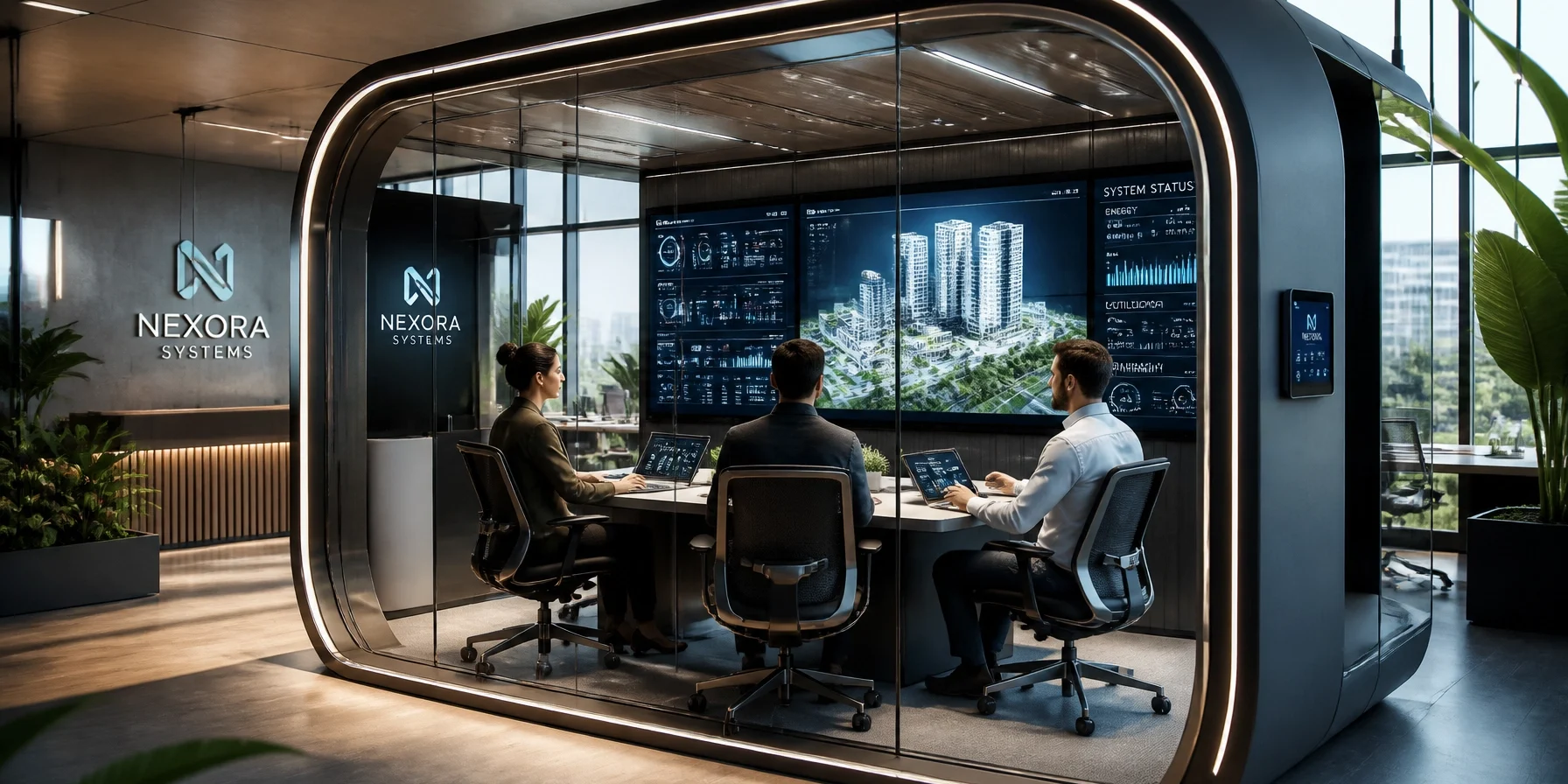
If you walk into a traditional computer lab today, the scene is likely a bit grim. You’ll see rows of beige or charcoal-colored towers, tangled nests of ethernet cables, and that distinct, dusty "server room" smell that hasn't changed since 1998. It’s a relic of an era when "going online" was a destination rather than a constant state of being.
In 2026, the question isn’t whether we still need physical infrastructure for technology, we do, but rather why we are still trying to fit modern, high-speed careers into a 20th-century floor plan. The traditional computer lab isn't just dying; it’s being replaced by something far more efficient, modular, and frankly, much cooler: High-Tech Pods.
At USA Entertainment Ventures LLC, we’ve watched this shift accelerate. As we manage various divisions and lead the charge in DOD Skill Bridge recruitment, we see firsthand how infrastructure dictates the quality of a talent pipeline. If your training environment looks like a library from the 90s, don’t be surprised when your output stays there too.
The Death of the "Row of PCs"
For decades, the computer lab was built on the principle of equity: providing a machine for those who didn't have one. But today, almost everyone has a supercomputer in their pocket and a laptop in their bag. The bottleneck is no longer the hardware; it’s the environment.
Static rows of PCs discourage collaboration, ignore the needs of specialized industries, and are a nightmare to maintain. Research from industry experts suggests that by 2026, organizations are shifting away from general-purpose labs toward a "hub-and-spoke" model. This involves smaller, specialized "Pods" that provide high-density technology for specific workflows that a standard laptop simply can't handle.
Logistics: The Digital Twin Revolution
In the world of logistics and supply chain management, a standard computer lab is about as useful as a paper map in a GPS world. Modern logistics requires real-time data visualization and the ability to run massive simulations.

High-tech logistics pods are winning the game because they serve as "Mission Control" centers. These spaces are equipped with:
- Digital Twin Dashboards: Allowing teams to monitor virtual replicas of warehouses or transport networks.
- IoT Integration: Small-scale hardware testing zones where RFID and sensor data can be analyzed.
- Collaborative Stations: Because logistics is a team sport.
Instead of sitting in a row, logistics professionals sit in pods that mirror the "War Rooms" of global shipping giants. This isn't just about furniture; it’s about creating a next-generation talent funnel where students and transitioning veterans can learn the actual tools of the trade.
Cybersecurity: Building the Modern Cyber Range
Cybersecurity is perhaps the biggest driver of the pod movement. You cannot teach elite cyber defense on a machine that’s also used for 101-level Word processing. The security requirements alone make traditional labs a liability.

Modular cyber pods are designed as "Cyber Ranges." They offer:
- Physical Isolation: Essential for malware analysis without risking the main network.
- Team Dynamics: Dedicated stations for "Red Teams" (attackers) and "Blue Teams" (defenders) to face off in real-time.
- AI-Enhanced Monitoring: Exposure to AI-assisted SOC (Security Operations Center) tools that are now the industry standard.
As we’ve noted in our previous discussion on why modular pods are the new hotspot for cyber careers, these environments provide a high-fidelity experience. For those coming through the DOD Skill Bridge program, this mimics the high-stakes environments they are used to, making the transition into the private sector seamless and effective.
Content Creation: The AI-Powered Studio
The third pillar of this infrastructure shift is content creation. By 2026, generative AI has become a default part of every creative workflow. You don't just "write a blog" or "edit a video", you orchestrate a series of AI-driven assets.

Traditional labs rarely have the GPU power or the acoustic treatment needed for modern media. Content pods, however, are essentially mini-studios. They provide:
- High-End Rendering Power: Workstations equipped with the latest GPUs for AI processing and 3D rendering.
- Multi-Modal Gear: Integrated microphones, lighting, and green screens for high-quality video and podcast production.
- XR Capability: Zones dedicated to Extended Reality (XR) and spatial computing.
This specialized infrastructure allows for a more tangible connection with audiences, moving beyond simple digital consumption to true immersive creation.
The ROI of Modular Infrastructure
Business leaders often hesitate at the cost of "ripping and replacing" old labs. However, the data supports a different story. Traditional labs have high overhead in terms of space, energy, and IT management. Modular pods, by contrast, are often more energy-efficient and can be reconfigured as technology changes.
According to recent workforce strategy data, companies that invest in specialized, modular environments see a significant increase in employee retention and training efficiency. Avoiding common mistakes in workforce strategy means recognizing that your physical space is a direct reflection of your technological maturity.
A Future-Focused Transition
Are computer labs dead? If you mean the rows of dusty desktops, then yes: and we should be glad to see them go. The future belongs to the High-Tech Pod. These modular, specialized, and team-oriented spaces are the only way to keep pace with the rapid evolution of logistics, cybersecurity, and AI-driven content creation.
For businesses looking to stay competitive, the move to pods isn't just an "IT upgrade": it’s a strategic business decision. Whether you are managing a global brand or recruiting the next wave of cybersecurity experts through programs like Skill Bridge, your infrastructure must be as agile as your talent.
At USA Entertainment Ventures LLC, we remain committed to helping organizations navigate these shifts. The goal is simple: stop building for 1998, and start building for the future.





